
Your kitchen faucet works harder than almost any other fixture in your home, handling thousands of operations monthly while dealing with water pressure, mineral deposits, and daily wear. Proper maintenance can extend your faucet’s lifespan from the typical 8-10 years to 15-20 years, saving you hundreds in replacement costs while ensuring optimal performance. Whether you have a single-hole modern design or a traditional three-hole configuration, this comprehensive guide covers everything you need to know about keeping your faucet functioning flawlessly.
Last Updated: September 2026 | Estimated Reading Time: 32 minutes
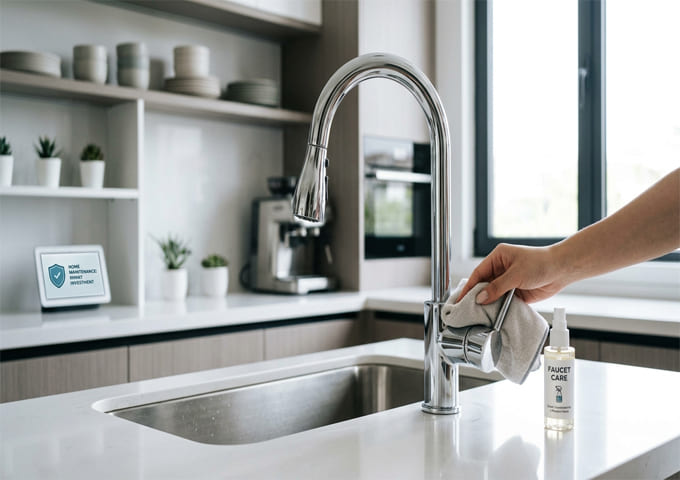
This Guide Will Help You:
- Understand maintenance differences between single-hole and three-hole faucet installations
- Master pull-out vs. pull-down faucet care techniques and common issues
- Identify early warning signs of faucet problems before costly repairs
- Create a maintenance schedule that prevents 80% of common faucet failures
- Troubleshoot specific issues for different faucet types and mounting configurations
- Choose the right cleaning products that won’t damage finishes or internal components
Understanding Your Faucet Type: Maintenance Starts with Knowledge
The maintenance approach for your kitchen faucet depends entirely on its design and installation type. Single-hole faucets with integrated sprayers require different care than traditional three-hole configurations, while pull-out models face unique challenges compared to pull-down designs. Understanding these differences prevents damage and ensures you’re addressing the right maintenance points.
Modern kitchen faucets fall into several distinct categories, each with specific maintenance requirements based on their internal mechanisms, mounting systems, and water delivery methods. The complexity has increased significantly over the past decade as manufacturers integrate more features while consumers demand longer lifespans and better performance.
Single-Hole vs. Three-Hole Faucet Maintenance Fundamentals
Single-hole faucets integrate all functions into one mounting point, creating a streamlined appearance but concentrating mechanical stress. These designs typically feature:
- Integrated mixing chambers requiring specialized cleaning techniques
- Single cartridge systems that need periodic replacement (every 3-5 years)
- More compact internal components that can clog faster in hard water areas
- Simplified external cleaning but complex internal maintenance
Three-hole configurations distribute mechanical functions across separate components, offering:
- Independent hot/cold handles with separate cartridge maintenance schedules
- Traditional valve seats that require different replacement techniques
- Multiple mounting points that need individual seal inspections
- More accessible internal components for DIY maintenance
The fundamental difference in maintenance approach centers on access and component integration. Single-hole systems require complete disassembly for most internal maintenance, while three-hole systems allow targeted repairs and maintenance of specific components.
Professional Insight: “After 15 years in commercial kitchen installations, I’ve noticed single-hole faucets need professional maintenance every 18-24 months in hard water areas, while three-hole systems can often go 3-4 years between major services if properly maintained by users,” shares Tom Rodriguez, Senior Plumbing Contractor at Metro Kitchen Solutions.
| Configuration Type | Maintenance Frequency | DIY Difficulty | Professional Service Cost | Common Failure Points |
|---|---|---|---|---|
| Single-Hole | Every 18-24 months | Moderate-High | $120-180 | Cartridge wear, aerator clogs |
| Three-Hole Traditional | Every 24-36 months | Low-Moderate | $90-140 | Valve seats, handle mechanisms |
| Three-Hole with Side Spray | Every 20-30 months | Moderate | $110-160 | Spray head clogs, hose connections |
Pull-Out vs. Pull-Down Design Maintenance Differences
Pull-out faucets feature horizontally-extending spray heads with specific maintenance needs:
- Horizontal hose routing creates unique wear patterns requiring rotation every 6 months
- Spring-loaded retraction systems need periodic lubrication and tension adjustment
- Connection points at the base experience different stress patterns than pull-down designs
- Spray head mechanisms often integrate multiple functions requiring specialized cleaning
Pull-down faucets with vertically-retracting spray heads require:
- Gravity-assisted retraction that reduces mechanical stress but creates different failure modes
- Longer hose lengths that need complete inspection annually for kinks and wear
- Higher mounting positions that can complicate user maintenance access
- Weight-and-spring balance systems requiring occasional recalibration
The maintenance complexity increases significantly with integrated features like magnetic docking, multiple spray patterns, and electronic sensors. These advanced features require specific maintenance protocols to prevent premature failure.
Maintenance Tip: Always test spray pattern functionality monthly. Changes in spray quality often indicate internal component wear before visible damage appears. Address spray pattern degradation immediately to prevent costly internal repairs.
Daily Care Routines: The Foundation of Long Faucet Life
Proper daily care prevents 75% of common faucet problems and takes less than 60 seconds per day. The key is consistency and using appropriate techniques for your specific faucet type and finish.
Universal Daily Care Protocol
Morning Quick-Clean (30 seconds):
- Wipe down all surfaces with a microfiber cloth to remove water spots
- Check spray function by activating pull-out/pull-down mechanisms
- Verify handle operation feels smooth without binding or sticking
- Inspect visible connections for any water droplets or mineral buildup
Evening Deep-Clean (2-3 minutes):
- Remove food particles from around the base and aerator
- Clean finish-appropriate solution on all surfaces (see finish-specific guide below)
- Dry thoroughly to prevent mineral deposit formation
- Check under-sink connections if easily accessible
The consistency of daily care matters more than intensity. Light daily attention prevents the mineral buildup and residue accumulation that leads to mechanical failures and finish damage.
Finish-Specific Daily Care Requirements
| Finish Type | Daily Care Method | Products to Use | Products to Avoid | Special Considerations |
|---|---|---|---|---|
| Brushed Stainless Steel | Grain-direction wiping with microfiber | Mild dish soap solution | Abrasive cleaners, bleach | Follow steel grain pattern always |
| Chrome/Polished Finishes | Soft cloth with glass cleaner | Ammonia-free glass cleaners | Acidic cleaners, rough cloths | Dry immediately to prevent spots |
| Matte Black/Oil-Rubbed Bronze | Gentle soap and water only | pH-neutral cleaners | Any abrasive or acidic products | Never use metal polish or harsh chemicals |
| Brass/Copper Finishes | Specialized metal cleaners monthly | Brass-specific cleaners | General purpose cleaners | Requires periodic protective coating |
Water Quality Impact on Daily Care:
Hard water areas (above 7 grains per gallon) require modified daily care:
- Increase drying frequency to twice daily minimum
- Use distilled water for final rinse to prevent mineral deposits
- Apply protective coating monthly to vulnerable finishes
- Inspect aerator weekly for mineral accumulation
Soft water areas (below 3 grains per gallon) focus on:
- Soap residue removal becomes more important than mineral deposits
- Weekly deep cleaning sufficient for most maintenance needs
- Extended time between component replacements (cartridges, seals)
Water Quality Tip: Install an under-sink water filtration system to reduce mineral content and extend faucet component life by 40-60%. The filter investment pays for itself in reduced maintenance and longer component life.
Weekly and Monthly Deep Maintenance Procedures
Weekly maintenance targets the components daily care can’t reach, focusing on internal mechanisms and hard-to-access areas where problems develop gradually.
Weekly Maintenance Checklist (15-20 minutes)
Aerator and Spray Head Deep Cleaning:
- Unscrew aerator from faucet spout (use rubber jar opener for grip without damage)
- Disassemble aerator components and soak in white vinegar solution (1:1 ratio) for 10 minutes
- Use old toothbrush to remove mineral deposits from screens and threading
- For pull-out/pull-down models, remove spray head and repeat cleaning process
- Inspect rubber seals and replace if showing cracks or hardening
- Reassemble with hand-tightening only (over-tightening damages threads)
Handle and Base Inspection:
- Test handle movement through full range of motion
- Check for unusual resistance, grinding sensations, or loose feel
- Inspect base mounting for any movement or water seepage
- Clean around mounting nuts and connection points
- Verify spray hose (if applicable) retracts fully and smoothly
Under-Sink Component Check:
- Inspect supply line connections for moisture or mineral deposits
- Test shut-off valves by turning 1/4 turn and returning to original position
- Check for any cabinet staining indicating slow leaks
- Verify hose connections (pull-out/pull-down models) show no kinks or wear
Monthly Comprehensive Maintenance (45-60 minutes)
Internal Component Service:
Single-Hole Faucet Monthly Service:
- Remove aerator and spray head for thorough cleaning and inspection
- Test cartridge operation by feeling for smooth movement without grinding
- Check mixing chamber for mineral buildup by running pure hot/cold water
- Inspect magnetic docking (if equipped) for proper hold strength and alignment
- Lubricate moving parts with food-safe silicone lubricant
Three-Hole Faucet Monthly Service:
- Service each handle independently, testing for smooth operation
- Inspect valve seats by checking for dripping when handles are fully closed
- Check spout-to-base connection for any looseness or movement
- Test side spray (if equipped) for consistent pressure and pattern
- Verify all mounting hardware remains tight without over-tightening
Advanced Cleaning Techniques:
For mineral deposit removal in hard water areas:
- Create cleaning solution: 2 cups warm water + 1/2 cup white vinegar + 1 tablespoon dish soap
- Apply with soft brush to all surfaces, allowing 10-minute contact time
- Use plastic pick (never metal) to remove deposits from crevices
- Rinse thoroughly and dry completely
- Apply finish-appropriate protective coating if needed
Professional Maintenance Insight: “The biggest mistake homeowners make is waiting for obvious problems before doing maintenance,” explains Maria Santos, Kitchen Design Consultant with 12 years of experience. “Monthly attention to small details prevents 90% of the service calls I see. It’s like car maintenance—consistency prevents major problems.”
Troubleshooting Common Issues by Faucet Type
Different faucet configurations develop predictable problems based on their design and usage patterns. Understanding these patterns helps you identify issues early and apply appropriate solutions before expensive repairs become necessary.
Single-Hole Faucet Problem Patterns
Low Water Pressure Issues:
- Cause: Mineral deposits in aerator or cartridge passages
- DIY Solution: Remove and clean aerator thoroughly; if problem persists, cartridge replacement likely needed
- Prevention: Weekly aerator cleaning in hard water areas
- Professional Help Needed: If pressure doesn’t improve after aerator cleaning
Temperature Control Problems:
- Cause: Cartridge wear or mineral deposits affecting mixing chamber
- Early Signs: Water temperature difficult to control, sudden temperature changes
- DIY Solution: Cartridge replacement (moderate difficulty, requires specific tools)
- Prevention: Annual cartridge service, water filtration system installation
Spray Function Failures:
- Cause: Internal diverter valve problems or spray head component failure
- Signs: Weak spray pressure, spray pattern changes, water coming from spout during spray use
- DIY Solution: Spray head cleaning and seal replacement
- Professional Required: Diverter valve replacement requires faucet disassembly
Three-Hole Configuration Problem Diagnosis
Handle Operation Issues:
| Problem | Likely Cause | DIY Solution | Professional Needed |
|---|---|---|---|
| Stiff Handle Movement | Worn valve seats or mineral buildup | Valve seat cleaning/replacement | Complex valve body work |
| Loose Handle Feel | Worn internal components or loose packing | Packing nut tightening, component replacement | Extensive internal wear |
| Dripping from Handles | Worn seals or valve seat damage | Seal replacement, valve seat dressing | Major valve body reconstruction |
Spout-Specific Problems:
- Dripping from spout: Usually valve seat wear, requires component replacement
- Reduced flow: Aerator clogging or supply line restrictions
- Temperature mixing issues: Individual valve problems requiring separate diagnosis
Pull-Out vs. Pull-Down Specific Maintenance Issues
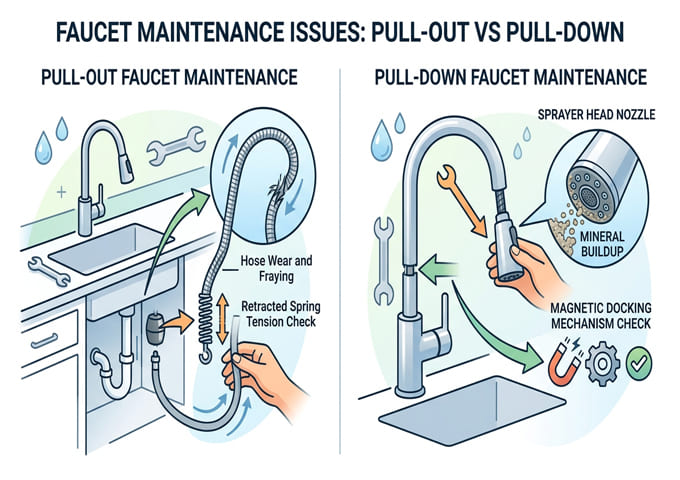
Pull-Out Faucet Unique Problems:
- Hose retraction failure: Spring mechanism wear, requires hose/spring assembly replacement
- Connection leaks: Horizontal stress on connections, often needs complete hose replacement
- Spray head wear: More frequent replacement due to horizontal stress patterns
- Base movement: Mounting system stress from horizontal pulling forces
Pull-Down Faucet Specific Issues:
- Inadequate retraction: Weight/spring balance problems, adjustment or replacement needed
- Hose kinking: Longer hose lengths develop permanent kinks, affecting water flow
- Mounting stress: Higher mounting positions create different stress patterns on internal components
- Spray head dropping: Magnetic docking system failure or weakening
Advanced Problem-Solving Techniques:
Intermittent Problems:
- Document when issues occur (time of day, water usage patterns, seasonal changes)
- Check building water pressure during problem times
- Consider thermal expansion effects in supply lines
- Evaluate usage patterns that might accelerate wear
Multiple Symptom Diagnosis:
- Address symptoms in order of safety importance (leaks first, convenience issues second)
- Consider system-wide issues (water quality, pressure, supply line problems)
- Evaluate whether repair costs justify replacement with newer, more efficient models
Troubleshooting Tip: Keep a maintenance log documenting problems, solutions, and component replacement dates. This helps identify patterns and predict future maintenance needs, often preventing emergency failures during peak usage times.
Professional Maintenance vs. DIY: Making the Right Choice
Deciding between professional service and DIY maintenance depends on your skill level, available time, and the complexity of the required work. Some maintenance tasks are straightforward for homeowners, while others require specialized tools and expertise to avoid expensive damage.
DIY-Friendly Maintenance Tasks
Low-Risk DIY Projects (Success Rate: 85-95%):
- Aerator cleaning and replacement
- Spray head cleaning and basic seal replacement
- Handle tightening and minor adjustments
- Surface cleaning and finish maintenance
- Basic leak detection and assessment
Moderate-Risk DIY Projects (Success Rate: 60-75%):
- Cartridge replacement in single-hole faucets
- Valve seat replacement in three-hole systems
- Hose replacement in pull-out/pull-down models
- Mounting hardware tightening and adjustment
- Supply line connection inspection and minor repairs
Required DIY Tools and Skills:
- Adjustable wrench set (multiple sizes for different connections)
- Plumber’s grease and appropriate lubricants
- Replacement parts specific to your faucet model
- Basic understanding of water supply shut-off procedures
- Ability to identify and source correct replacement components
When Professional Service Is Essential
High-Risk Projects Requiring Professional Service:
- Internal valve body repairs requiring complete disassembly
- Supply line replacement or major connection work
- Mounting system modifications or reinforcement
- Electronic component repair in smart faucets
- Any work involving structural changes to sink or countertop
Professional Service Value Proposition:
- Warranty Protection: Professional service often includes warranty on parts and labor
- Proper Diagnosis: Experienced technicians identify underlying problems DIY approaches miss
- Specialized Tools: Professionals have manufacturer-specific tools for proper service
- Safety Assurance: Eliminates risk of water damage from improper repairs
- Time Efficiency: Professional service typically completes in 1-2 hours vs. weekend DIY projects
When to Call Professionals Immediately:
- Any sign of water damage or structural issues
- Complete loss of water flow or pressure
- Unusual sounds (grinding, whistling, banging) during operation
- Electronic or smart feature malfunctions
- Multiple simultaneous problems indicating system-wide issues
| Service Type | Average DIY Time | Professional Time | DIY Cost | Professional Cost | Risk Level |
|---|---|---|---|---|---|
| Aerator Cleaning | 15 minutes | N/A | $0-5 | N/A | Very Low |
| Cartridge Replacement | 2-4 hours | 45 minutes | $25-60 | $120-180 | Moderate |
| Hose Replacement | 1-3 hours | 30 minutes | $40-80 | $140-200 | Moderate-High |
| Valve Body Repair | Not Recommended | 1-2 hours | N/A | $200-350 | High |
Professional Service Selection Criteria
Choosing the Right Service Provider:
- Verify licensing and insurance for plumbing work
- Request references from recent similar projects
- Confirm availability of manufacturer-specific parts
- Understand warranty terms for both parts and labor
- Get detailed written estimates before authorizing work
Questions to Ask Potential Service Providers:
- “How familiar are you with [your faucet brand/model]?”
- “What warranty do you provide on parts and labor?”
- “Can you provide a detailed written estimate before starting work?”
- “What is your policy if additional problems are discovered during service?”
- “Do you carry common replacement parts or need to order them?”
At SPRINGFAUCET, we’ve seen the importance of proper maintenance through our 20 years of manufacturing experience. Our modern stainless steel kitchen faucet with black silicon pipe has gained popularity in European and American markets partly because we design maintenance accessibility into every component. The integrated maintenance features reduce service complexity and extend operational life significantly.
Advanced Maintenance for Modern Faucet Features
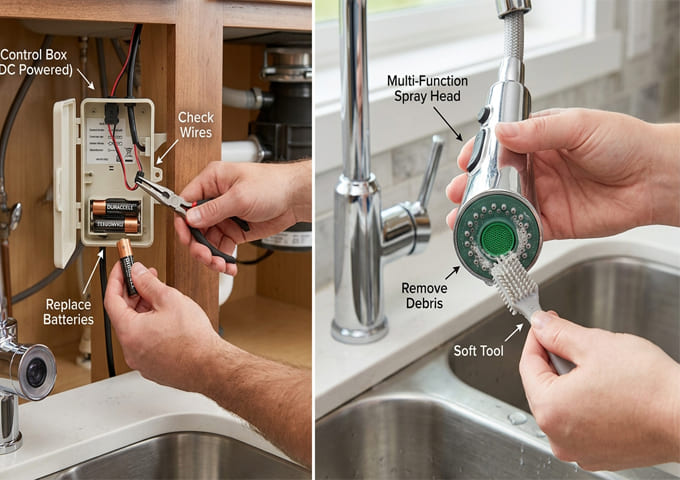
Today’s kitchen faucets integrate sophisticated features requiring specialized maintenance approaches beyond traditional mechanical components. Understanding these systems prevents expensive failures and ensures optimal performance throughout the faucet’s extended lifespan.
Smart Faucet and Electronic Component Maintenance
Sensor-Based Operation Systems:
- Monthly sensor lens cleaning with alcohol-free solution prevents false activation
- Quarterly battery replacement prevents power interruptions during peak usage
- Annual recalibration ensures accurate temperature and flow control
- Keep backup manual operation instructions accessible for emergencies
Touchless Technology Maintenance:
- Avoid abrasive cleaners on sensor areas that can damage detection capability
- Test sensor response range monthly to identify degradation early
- Clean electronic housing with barely-damp cloth only
- Professional service required for any electronic component failures
Smart Home Integration Features:
- Update firmware according to manufacturer schedules (typically quarterly)
- Test connectivity and app functionality monthly
- Backup configuration settings before any system updates
- Professional configuration required for complex smart home integration
Magnetic Docking and Advanced Spray Systems
Magnetic Docking Maintenance: The magnetic docking systems in pull-down faucets require specific care to maintain proper hold strength:
- Clean magnetic surfaces weekly with soft cloth to remove mineral deposits
- Test docking strength monthly by gentle pulling—should require deliberate force to release
- Inspect docking alignment quarterly; misalignment indicates mounting or wear issues
- Replace magnetic components every 3-5 years depending on water quality and usage
Multi-Pattern Spray Head Service: Modern spray heads offer multiple patterns requiring individual maintenance:
- Test each spray pattern weekly to identify clogged nozzles early
- Disassemble spray head monthly for thorough internal cleaning
- Soak pattern-changing mechanism in vinegar solution to prevent mineral binding
- Replace internal screens annually in hard water areas
Pause Feature Maintenance: Many modern faucets include temporary shut-off features requiring specific service:
- Test pause mechanism weekly to ensure complete water stoppage
- Lubricate pause button mechanism quarterly with food-safe lubricant
- Inspect rubber seals in pause mechanism annually for wear or hardening
- Professional service required if pause feature fails to stop water completely
Advanced Feature Tip: Create a maintenance checklist specific to your faucet’s features. Modern faucets can have 8-12 different systems requiring individual attention. A systematic approach prevents overlooking critical components that could cause expensive failures.
Water Filtration Integration Maintenance
Integrated Filter System Care:
- Replace filter cartridges according to manufacturer schedule (typically every 3-6 months)
- Monitor water flow rate to identify filter saturation before complete blockage
- Sanitize filter housing quarterly with appropriate disinfecting solution
- Test filtered water quality annually with home test kits or professional analysis
Dual-Path Water System Maintenance: Some advanced faucets provide both filtered and unfiltered water paths:
- Service each path independently with appropriate maintenance schedules
- Test diverter valve monthly to ensure proper water path selection
- Clean filter bypass mechanism quarterly to prevent cross-contamination
- Professional annual service recommended for complex dual-path systems
Seasonal Maintenance and Environmental Considerations
Environmental factors significantly impact faucet maintenance requirements, with seasonal changes creating unique challenges for optimal performance and longevity.
Winter Protection and Cold Weather Maintenance
Freeze Prevention Protocols:
- Insulate under-sink supply lines in unheated areas
- Maintain cabinet temperature above 55°F during cold snaps
- Open cabinet doors during extreme cold to allow warm air circulation
- Know location of main water shut-off for emergency freeze situations
Cold Weather Performance Issues:
- Metal components contract, potentially causing temporary seal leaks
- Lubricants thicken, making handle operation stiffer
- Condensation increases around cold metal surfaces
- Supply line connections may require seasonal tightening
Winter-Specific Maintenance Schedule:
- November: Complete faucet winterization including insulation check
- December-February: Weekly under-sink temperature monitoring
- March: Post-winter inspection for freeze damage or connection loosening
- Ongoing: Daily operation check during temperature extremes
Summer and High-Usage Period Maintenance
Hot Weather Challenges:
- Increased mineral deposit formation due to higher evaporation rates
- Thermal expansion stress on connections and seals
- Higher usage frequency accelerating component wear
- UV exposure (if applicable) affecting surface finishes
Peak Usage Maintenance Adjustments:
- Increase cleaning frequency during heavy entertaining seasons
- Monitor component wear more closely during high-usage periods
- Stock replacement parts (aerators, seals) before peak usage seasons
- Schedule professional service before rather than during peak usage
Vacation Home Considerations:
- Complete shutdown procedures for extended absences
- Restart protocols including full system flushing
- Professional inspection recommended after extended non-use
- Water quality testing after prolonged system dormancy
| Season | Focus Areas | Maintenance Frequency | Special Considerations |
|---|---|---|---|
| Spring | Post-winter inspection, deep cleaning | Weekly for 4 weeks | Check for freeze damage, connection loosening |
| Summer | High-usage monitoring, mineral deposits | Bi-weekly | Increased usage, evaporation effects |
| Fall | Winterization preparation, component service | Monthly | Prepare for cold weather, stock supplies |
| Winter | Freeze protection, reduced operation checking | Weekly | Temperature monitoring, emergency preparedness |
At SPRINGFAUCET, our two decades of manufacturing experience has taught us that maintenance accessibility directly impacts customer satisfaction. That’s why our modern stainless steel kitchen faucet with black silicon pipe incorporates easily serviceable components and clear maintenance indicators. The European and American market success of this model demonstrates how thoughtful design reduces long-term ownership costs through simplified maintenance requirements.
Emergency Troubleshooting and Quick Fixes
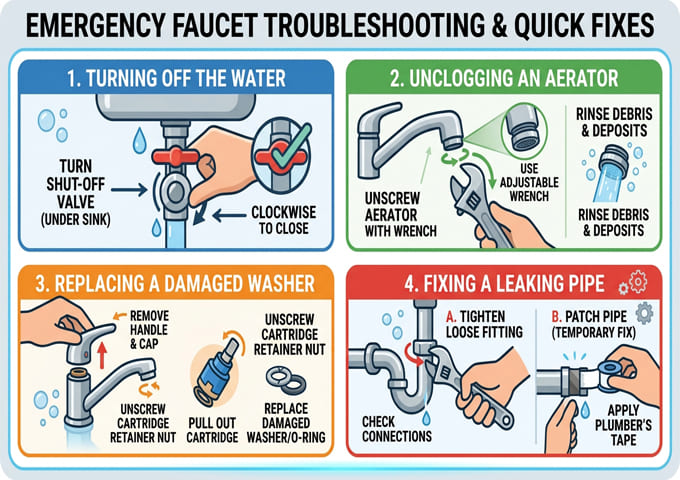
Kitchen faucet emergencies typically occur at the worst possible times—during dinner preparation, holiday entertaining, or when guests arrive. Having quick diagnostic and temporary fix knowledge can prevent water damage and restore basic functionality until professional service is available.
Immediate Response Protocol for Common Emergencies
Water Won’t Stop Flowing (Emergency Priority #1):
- Immediate action: Locate and turn off under-sink shut-off valves (turn clockwise)
- If no under-sink valves: Find main water shut-off to house
- Temporary measures: Remove aerator to reduce flow if shut-off isn’t accessible
- Safety check: Move electrical appliances away from water
- Documentation: Take photos for insurance and service provider
No Water Flow at All:
- Check other faucets to determine if problem is isolated or system-wide
- Inspect under-sink shut-off valves – ensure they’re fully open (counter-clockwise)
- Remove and clean aerator – 60% of “no flow” issues are severe aerator blockage
- Check pull-out/pull-down hose for kinks or disconnection
- Test building water pressure at other locations
Severe Leaking Under Sink:
- Shut off water supply immediately at closest accessible point
- Place containers to catch water and protect cabinet contents
- Identify leak source: Supply lines, connections, or faucet body
- Remove cabinet contents to prevent water damage
- Call professional service – under-sink leaks often require immediate expert attention
Quick Temporary Solutions
Temporary Leak Management:
- Supply line weeping: Wrap with rubber tape as temporary measure only
- Aerator leaking: Remove aerator temporarily to stop leak, use strainer basket for debris
- Handle leaking: Tighten packing nut gently (1/4 turn maximum)
- Spout dripping: Turn handles firmly closed, but don’t over-torque
Temporary Flow Restoration:
- Partial blockage: Remove aerator, clean thoroughly, operate without aerator temporarily
- Pull-out/down malfunction: Use faucet in fixed position until hose repaired
- Handle problems: If one handle fails in three-hole system, use functioning handle with careful mixing
Emergency Supply Management:
- Keep emergency water supply (1-2 gallons) for essential kitchen needs
- Identify alternative water sources in home for cooking and cleaning
- Have service provider contact information readily accessible
- Maintain basic repair supplies: Rubber washers, plumber’s tape, adjustable wrench
Emergency Preparedness Tip: Create a faucet emergency kit containing: adjustable wrench, rubber washers in common sizes, plumber’s tape, flashlight, and emergency contact numbers. Store it in an accessible location near your water shut-off valves. This preparation can save hundreds in water damage and service costs.
Frequently Asked Questions About Faucet Maintenance

How often should I replace my kitchen faucet aerator?
Replace aerators every 12-18 months in average water quality areas, or every 6-9 months in hard water regions. Signs you need replacement include reduced flow, uneven spray patterns, or visible mineral buildup that cleaning doesn’t remove. Keep spare aerators on hand since they’re inexpensive ($3-8) but critical for proper function.
What’s the difference in maintenance between ceramic disc and ball valve cartridges?
Ceramic disc cartridges typically last 8-12 years with proper maintenance and rarely need adjustment, but when they fail, they require complete replacement. Ball valve cartridges need more frequent maintenance (every 2-4 years) but offer better repairability with individual component replacement. Choose maintenance approach based on your DIY comfort level and local water quality.
Can I use CLR or lime-away products on my faucet?
Avoid CLR and similar acidic cleaners on faucets as they can damage finishes and rubber seals. Use white vinegar (diluted 1:1 with water) for mineral deposits, which is effective but gentler. For stubborn deposits, increase contact time rather than using stronger chemicals. Always test cleaning solutions on hidden areas first.
How do I know if my pull-out spray hose needs replacement?
Replace the hose when you notice: difficulty retracting, kinks that don’t straighten, reduced spray pressure, or visible cracking. Most pull-out hoses last 3-5 years with regular use. Early replacement prevents internal component damage that’s more expensive to repair. Quality replacement hoses cost $25-60 and typically take 30-45 minutes to install.
Should I turn off water supply when leaving home for extended periods?
Yes, turn off individual faucet supply valves for absences longer than a week. This prevents minor leaks from becoming major water damage. For absences longer than a month, also run the faucet briefly upon return to clear any stagnant water and check all components for proper operation.
What maintenance schedule should I follow for a vacation home faucet?
Vacation home faucets need pre-arrival and post-departure service. Before each stay: turn on water supply, run faucet for 2-3 minutes, check for leaks, test all functions. After each stay: turn off supply valves, run faucet until empty, clean and dry all surfaces. Schedule professional service annually rather than seasonally due to irregular usage patterns.
How can I tell if my faucet problem requires professional repair?
Call professionals for: internal component failures requiring disassembly, any electrical issues with smart faucets, supply line problems, mounting system failures, or when multiple components fail simultaneously. DIY is appropriate for: cleaning, aerator replacement, minor adjustments, and surface maintenance. When in doubt, consultation calls often cost $50-75 but prevent expensive mistakes.
Conclusion: Your Faucet Maintenance Success Plan
Proper faucet maintenance transforms a routine household chore into a strategic investment that extends your faucet’s lifespan from the typical 8-10 years to 15-20 years while maintaining peak performance. The key lies in understanding your specific faucet type—whether single-hole or three-hole, pull-out or pull-down—and implementing appropriate maintenance strategies that address each design’s unique requirements.
The maintenance approach that delivers the best results combines consistent daily care with systematic weekly and monthly attention to components that daily cleaning cannot reach. This investment of 15-20 minutes weekly prevents 75% of common faucet problems while identifying potential issues before they become expensive repairs. The difference between reactive and proactive maintenance often determines whether you’ll enjoy decades of reliable service or face frequent frustrations and premature replacement.
Your next steps should focus on immediate assessment and systematic implementation. Start by identifying your faucet type and current condition, then establish the daily care routine appropriate for your finish and water quality. Schedule monthly comprehensive maintenance sessions, and don’t hesitate to invest in professional annual service for complex systems or when you’re uncertain about DIY procedures. Remember that quality maintenance today prevents emergency service calls tomorrow—and those emergency calls typically cost 3-5 times more than preventive care.
Recommended Internal & External Links:
Internal Resources:
- Kitchen Faucet Installation Guide: Professional Tips for Perfect Setup – Comprehensive installation techniques for different faucet types
- Water Quality Testing: Impact on Faucet Performance and Longevity – Understanding how water conditions affect maintenance needs
- Faucet Finish Guide: Choosing Faucet Finishes A Complete Guide For Modern Bathrooms – Specific care instructions for various finish types
External Authority Sources:
4. Plumbing-Heating-Cooling Contractors Association – Maintenance Standards – Industry maintenance guidelines and best practices
5. American Society of Plumbing Engineers – Water Quality Guidelines – Professional water quality standards affecting faucet performance
6. Consumer Reports – Kitchen Faucet Buying and Maintenance Guide – Independent testing and maintenance recommendations
7. Wikipedia – Plumbing Fixture Maintenance – General overview of plumbing fixture care and maintenance principles
8. International Association of Plumbing and Mechanical Officials – Code Standards – Official maintenance and safety standards for plumbing fixtures
9. Environmental Protection Agency – WaterSense Program – Water efficiency standards and maintenance for conservation