
Choosing a kitchen faucet can feel overwhelming. You’re faced with a wall of terms: pull-down vs. pull-out, single-handle vs. touchless, PVD vs. chrome, 16-gauge steel vs. lead-free brass. What does it all mean for your daily life? As a manufacturer at the forefront of faucet design and production, we’re here to pull back the curtain.
A kitchen faucet is the single most-used appliance in your kitchen. It’s an investment in your daily convenience, hygiene, and kitchen aesthetic. This guide will walk you through every single aspect of a kitchen faucet—from the raw materials forged in our factory to the final spray pattern you’ll use to wash your vegetables. By the end, you’ll be able to choose the perfect faucet with the confidence of an industry expert.
Last Updated: Dec 2025 | Estimated Reading Time: 15 minutes
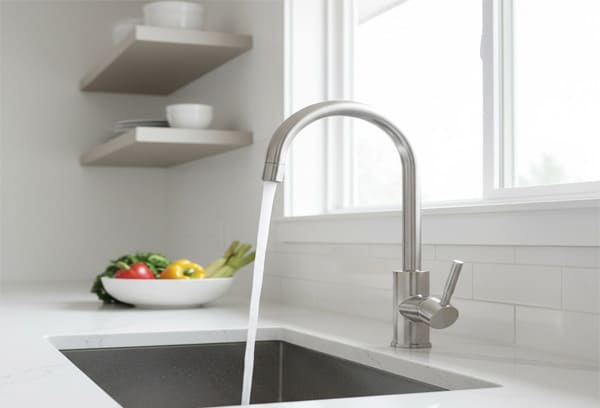
Key Faucet Decisions at a Glance
Before we dive deep, here’s a quick overview of the most critical choices you’ll make.
| Decision Point | Common Options | What It Means for You (The Short Version) |
|---|---|---|
| 1. Core Material | Brass, Stainless Steel, Zinc Alloy | Brass: The traditional premium standard. Stainless Steel: Modern, durable, and naturally lead-free. Zinc: Budget-friendly, best for handles. |
| 2. Functionality | Standard, Pull-Down, Pull-Out | Pull-Down: Most popular; high-arc design for large pots. Pull-Out: Lower profile, good for smaller sinks. Standard: Basic and budget-friendly. |
| 3. Operation | Single-Handle, Double-Handle, Touchless | Single-Handle: Most common and convenient. Double-Handle: Precise hot/cold control, classic look. Touchless: The ultimate in hygiene. |
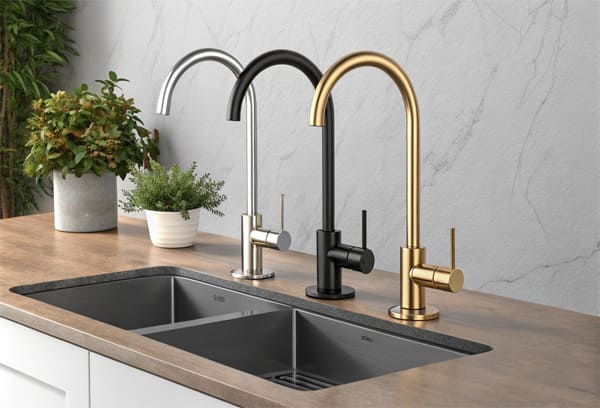
| 4. Finish | Chrome, Brushed Nickel, Matte Black | Chrome: Classic, shiny, and easy to match. Brushed Nickel: Hides fingerprints well. Matte Black: Bold, modern statement. |
The Heart of the Faucet: A Manufacturer’s Guide to Materials
The material of your faucet’s body determines its lifespan, safety, and price. As manufacturers, this is our first and most important decision.
| Material | Durability | Lead-Free? | Manufacturer’s Insight & Who It’s For | |
|---|---|---|---|---|
| DZR Brass | Excellent | Yes | Dezincification-Resistant Brass. The absolute gold standard. We use this for high-end faucets in markets with aggressive water. It will not corrode from the inside. For: The buyer who wants a faucet for life. | |
| Lead-Free Brass | Excellent | Yes | Standard for all quality faucets sold in the US & Europe. Durable, reliable, and provides a premium, heavy feel. For: The majority of quality-conscious homeowners. | |
| SUS 304 Stainless Steel | Very Good | Naturally | A fantastic, modern alternative to brass. It is 100% lead-free by nature and will not corrode. Easier to create brushed finishes. For: Health-conscious families and modern kitchens. | |
| Standard Brass | Good | No | Still used in some markets with less stringent regulations for non-potable water fixtures. Not recommended for kitchen faucets in the US/EU. | |
| SUS 201 Stainless Steel | Fair | Naturally | A lower grade of stainless steel with less nickel. More susceptible to rust over time, especially in humid or coastal areas. We avoid this for kitchen faucets. | |
| Zinc Alloy | Fair (Body) / Good (Handle) | Varies | Lightweight and inexpensive. Prone to corrosion over time. We only recommend zinc alloy for handles, never for the main faucet body that holds water. For: Budget-conscious applications where the handle is separate. | |
| ABS Plastic | Fair | Yes | Primarily used for sprayer heads on pull-down faucets to keep them lightweight, cool to the touch, and to prevent damage if dropped in the sink. |
Insider Tip: Don’t be fooled by a faucet that looks like steel but feels suspiciously light. A quality faucet should have a noticeable heft. This weight almost always comes from a solid brass or stainless steel body, which is exactly what you want for long-term durability.
Form & Function: Installation, Style, and Handles
How a faucet mounts and operates defines your daily interaction with it.
Installation Types
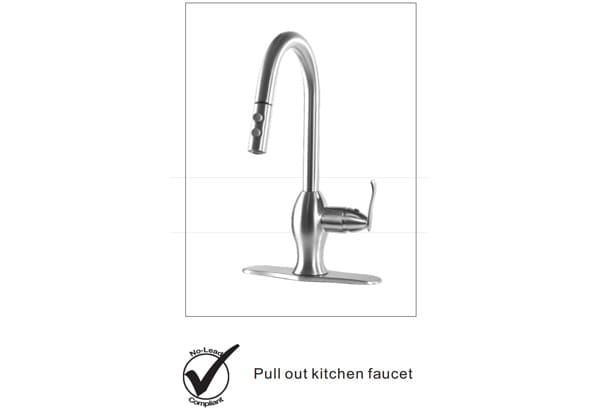
- Deck-Mount: The most common type. The faucet mounts directly onto the countertop or the sink deck itself through 1 to 4 holes.
- Wall-Mount: Mounts to the wall behind the sink. This creates a clean, uncluttered countertop look, popular in commercial or farmhouse-style kitchens. It requires the water lines to be placed inside the wall.
- Standing Fixing: This is another term for deck-mount, emphasizing it stands on the horizontal surface.
Handle & Operation Types
- Single-Handle: The most popular choice for kitchens. A single lever controls both water volume (up/down) and temperature (left/right). It’s convenient, easy to use with one hand, and requires only one hole for installation.
- Double-Handle: Features two separate handles for hot and cold water. This provides very precise temperature control and offers a classic, symmetrical look. It typically requires three holes in the countertop.
- Touchless (Sensor): Uses an infrared sensor to turn the water on and off with a wave of your hand. The ultimate in hygiene, perfect for preventing the spread of germs from raw food. The handle is used to set the default temperature.
- Touch-On: Allows you to tap anywhere on the faucet’s body or spout with your wrist or forearm to start and stop the water flow. It’s incredibly convenient when your hands are messy.
The Workhorse Features: Faucet Functionality Explained
This is where a faucet goes from being a simple water dispenser to a versatile kitchen tool.
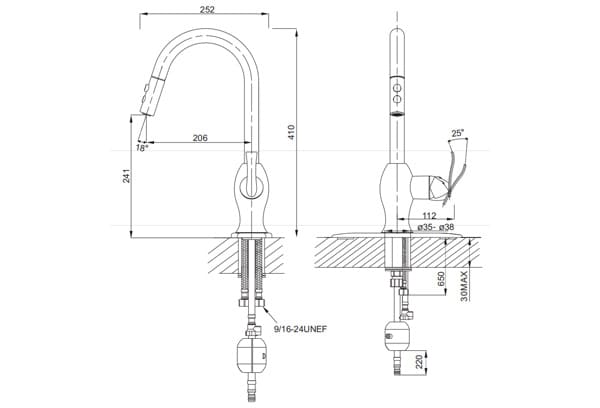
Pull-Down vs. Pull-Out vs. Standard
- Pull-Down Faucets: These have a high-arc gooseneck spout, and the sprayer head pulls straight down into the sink.
- Pros: Excellent for filling tall pots, great reach into large, deep sinks. The high arc is a statement piece.
- Cons: Can cause more splashing in very shallow sinks.
- Pull-Out Faucets: These have a lower-profile spout, and the entire head of the faucet pulls out towards you.
- Pros: Less splashing, good for kitchens with limited overhead space (e.g., under a low cabinet). The extended hose is great for filling pots on the counter.
- Cons: Can be less ergonomic for rinsing down the sides of the sink.
- Standard (Non-Pull): A fixed faucet with a spout that may or may not swivel. Some have a separate side sprayer. This is the most basic and budget-friendly option.
For its superior ergonomics and modern look, the pull-down faucet has become the industry standard. That’s why we’ve perfected models like the SpringFaucet Modern Stainless Steel Faucet with Pull-Down Sprayer, which combines a durable SUS 304 stainless steel body with the everyday convenience of a flexible pull-down hose.
Spray Modes: More Than Just Water
Modern sprayer heads offer multiple functions at the click of a button.
| Spray Mode | Icon | How It Works | Best Used For |
|---|---|---|---|
| Stream (Aerated) | 💧 | A clear, non-splashing, air-infused stream of water. The default mode. | Filling pots, glasses, and general hand washing. |
| Spray | 🚿 | A powerful, wide spray of water, similar to a mini-shower. | Rinsing food debris off plates, cleaning the entire sink basin quickly. |
| Mist / Boost | 💨 | A fine, gentle mist or a more forceful “boosted” spray. | Gently rinsing delicate fruits and vegetables (like berries) without bruising them. |
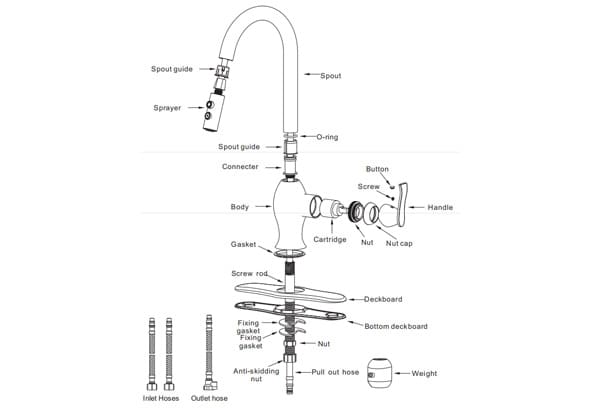
The Finishing Touch: A Guide to Faucet Finishes
The finish is your faucet’s armor and its style statement. The technology behind it determines its beauty and durability.
| Finish | Manufacturing Process | Durability | Manufacturer’s Insight & Maintenance |
|---|---|---|---|
| Polished Chrome | Electroplating | Very Good | The industry classic. A layer of chromium is electrically bonded to the faucet body. Very durable and easy to clean, but shows fingerprints and water spots easily. |
| Brushed Nickel | Varies (often PVD) | Excellent | A soft, metallic look that’s exceptional at hiding fingerprints and water spots. It’s a top choice for busy family kitchens. |
| Matte Black | Powder Coating / Painting | Good | A bold, modern choice. A layer of pigmented powder is applied and baked on. It’s durable but can be chipped by sharp objects. Clean with a soft cloth; avoid abrasive cleaners. |
| PVD Finishes | PVD (Physical Vapor Deposition) | Superior | A high-tech process where a durable metal finish (like titanium or zirconium) is vaporized in a vacuum chamber and bonded to the faucet at a molecular level. Incredibly resistant to scratching, tarnishing, and corrosion. Used for finishes like Brushed Gold, Gunmetal, and high-end Brushed Nickel. |
Pro Tip: If you live in a coastal area or have hard water, investing in a PVD finish is a wise choice. It offers the best long-term protection against the corrosive effects of salt air and mineral buildup.
Inside the Engine: The Importance of the Cartridge
The cartridge is the internal valve that controls water flow and temperature. Its quality is non-negotiable for a drip-free faucet.
- The Gold Standard: Ceramic Disc Cartridge. This design uses two ultra-hard, perfectly flat ceramic discs that shear against each other. When aligned, water flows; when separated, they create a watertight seal. They are incredibly durable and resistant to wear and tear from debris in the water. If a faucet doesn’t have a ceramic disc cartridge, don’t buy it.
- Cartridge Size:
- 25mm/26mm: Used in smaller, more slender faucet designs, often for bathrooms or bar sinks.
- 35mm/40mm: The standard sizes for most kitchen faucets. A larger cartridge allows for a greater volume of water to pass through, resulting in a stronger flow rate, which is essential for kitchen tasks.
Faucet Styles: Finding Your Kitchen’s Personality
- Modern/Contemporary: Characterized by clean lines, minimalist forms, and geometric shapes (goosenecks, right angles). Finishes like stainless steel, matte black, and brushed gold are common.
- Traditional/Classic: Features more ornate details, curved spouts, and decorative flairs. Finishes like polished chrome, polished nickel, and oil-rubbed bronze fit this style.
- Transitional: The perfect blend of modern and traditional. It takes the clean lines of modern design and softens them with some classic curves. This is a very popular and versatile style.
- Farmhouse/Country: Often features a bridge design (two-handle with a connecting pipe) or a more utilitarian, vintage look. Pairs perfectly with apron-front sinks.
Frequently Asked Questions (FAQs) {#faq}
Q1: Are expensive kitchen faucets worth the money? Often, yes. The extra cost typically goes into superior materials (DZR brass vs. zinc), a more advanced cartridge (from a top brand like Kerox or Sedal), a more durable finish (PVD vs. simple paint), and better overall engineering, resulting in a longer, leak-free lifespan.
Q2: How long should a good kitchen faucet last? A quality kitchen faucet from a reputable manufacturer, made with a brass or stainless steel body and a ceramic disc cartridge, should easily last 10-15 years or more with proper care.
Q3: My faucet’s water pressure is low. What’s the cause? The most common cause is a clogged aerator. The aerator is the small screen at the very tip of the faucet spout. Unscrew it, rinse it out thoroughly to remove mineral buildup, and screw it back on. This solves the problem 90% of the time.
Conclusion: You’re Now the Expert
From the DZR brass body to the 40mm ceramic cartridge and the multi-function spray head, you now have a complete, manufacturer-level understanding of the kitchen faucet. You can confidently walk into a showroom or browse online, cutting through the marketing jargon to identify the features and materials that truly matter for your home.
Your kitchen faucet is a long-term partner in your daily culinary adventures. By choosing one with a solid foundation—great materials, a reliable cartridge, and practical functionality—you’re ensuring years of effortless, reliable performance.
Recommended Links
Internal Links:
- Our Faucets: Explore the SpringFaucet Modern Pull-Down Faucet
- Blog: Top 10 Kitchen Sink Brands in the USA (A Manufacturer’s Review)
- About Us: Learn About Our Manufacturing Process and Commitment to Quality
External Links (Authoritative Sources):
- Wikipedia: Faucet – A great overview of the history, terminology, and mechanics of faucets.
- NSF International: Certified Plumbing Products – An independent organization that certifies products to ensure they meet public health and safety standards, including lead-free compliance.
- ASME (American Society of Mechanical Engineers) – The body that sets the performance and safety standards (A112.18.1) that all faucets sold in North America must meet.