

You’ve spent weeks, maybe months, designing your perfect modern bathroom. You’ve chosen the tiles, the vanity, the tub. Now, for the final touch—the faucet. This single element can elevate your entire design or become a point of daily frustration. The key? Its finish.
The faucet finish is more than just a color; it’s the technology, the texture, and the protective layer you will see and touch every single day. It dictates durability, cleaning effort, and how well the faucet harmonizes with your style. Choosing the right finish is an investment in your bathroom’s long-term beauty and functionality. This guide, backed by manufacturing expertise, will empower you to select a finish that is not only stunning but built to last.
Last Updated: Mar 2026 | Estimated Reading Time: 14 minutes
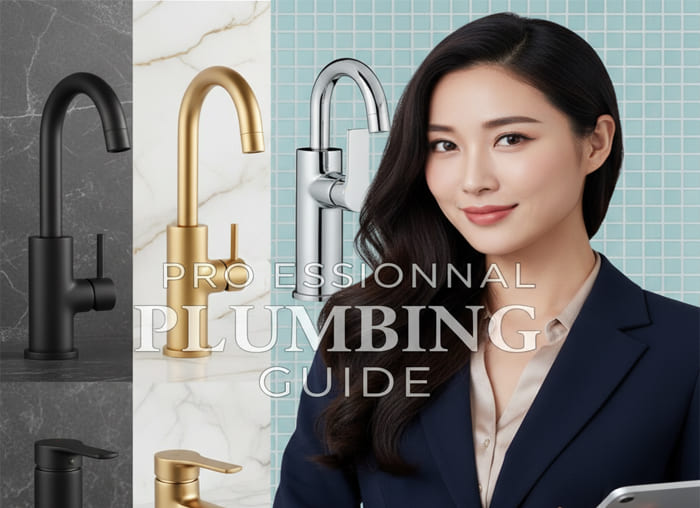
In This Ultimate Guide, You’ll Discover:
- The five primary faucet finishing technologies explained in simple terms.
- A visual guide to matching finishes with popular bathroom styles, from minimalist to industrial.
- A detailed durability and maintenance comparison chart—the truth about what really lasts.
- The hidden traps to avoid, including environmental mismatches and the risks of cheap alternatives.
- Future-forward trends in smart, sustainable, and self-cleaning faucet surfaces.
The Core Types: A Deep Dive into Modern Faucet Finishes
Understanding the technology behind the color is the first step to making a wise choice. Each process yields a different look, feel, and performance profile.
1. Electroplating (Chrome Plating)
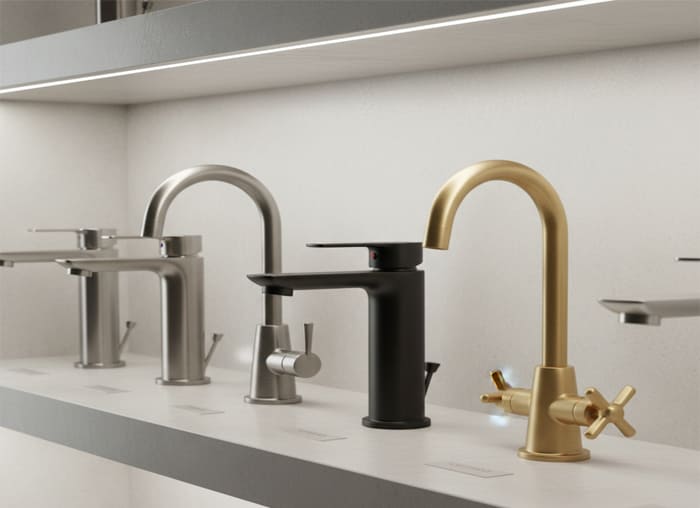
This is the classic, time-tested method. A faucet (typically made of brass) is submerged in a series of chemical baths, and an electric current is used to deposit thin layers of metal, like nickel and finally chromium, onto the surface.
- Look & Feel: Bright, mirror-like, cool-toned shine.
- Pros: Highly durable when done correctly, easy to clean, universally matches most decors, and is often the most affordable option from quality brands.
- Cons: Shows fingerprints and water spots easily. The quality varies dramatically; thin plating on cheap faucets will peel and corrode.
2. Brushed Finishes (Brushed Nickel/Chrome)
This finish starts with an electroplated layer (like nickel) which is then physically abraded with a wire brush or abrasive belt to create a soft, textured, non-reflective look. It’s then sealed with a clear protective coat.
- Look & Feel: Soft, matte metallic with subtle texture. Warmer in tone than chrome.
- Pros: Excellent at hiding fingerprints and water spots, making it a low-maintenance favorite for family bathrooms.
- Cons: Can be slightly more expensive than polished chrome. Requires non-abrasive cleaners to protect the clear topcoat.
3. PVD (Physical Vapor Deposition)
PVD is a high-tech process that vaporizes a solid material (like titanium or zirconium) in a vacuum and bonds it to the faucet surface at a molecular level. This is the technology behind today’s most vibrant and durable metallic finishes.
- Look & Feel: Creates stunning, consistent colors like Brushed Gold, Rose Gold, Champagne Bronze, and Graphite Black.
- Pros: Extremely durable. It is highly resistant to scratches, abrasion, and tarnishing—far superior to traditional plating. The color is vibrant and won’t fade.
- Cons: It’s a premium finish and typically comes at a higher price point.
4. Powder Coating
In this process, a dry, pigmented powder is electrostatically applied to the faucet. The faucet is then cured in an oven, where the powder melts and fuses into a smooth, hard, and durable shell.
- Look & Feel: Creates opaque, often matte finishes like Matte Black and Matte White.
- Pros: Provides a thick, uniform, and durable coating that is very resistant to chipping and scratches. Perfect for achieving a bold, modern look.
- Cons: Can be more susceptible to harsh chemical cleaners. Repairing a chip is nearly impossible; the fixture would need to be replaced.
5. Living Finishes (Antique Copper/Bronze)
These finishes are chemically treated to accelerate the natural oxidation process (patina). They are designed to change over time with use and exposure to the environment.
- Look & Feel: Rich, dynamic, and rustic. They evolve, creating a unique pattern over time.
- Pros: Offers a unique, one-of-a-kind character that is perfect for vintage or farmhouse styles.
- Cons: High-maintenance. They are not sealed and require special waxes to protect them. They can be damaged by common cleaners and will react to oils from your hands. Not recommended for high-traffic bathrooms.
How to Match Your Faucet Finish to Your Bathroom Style
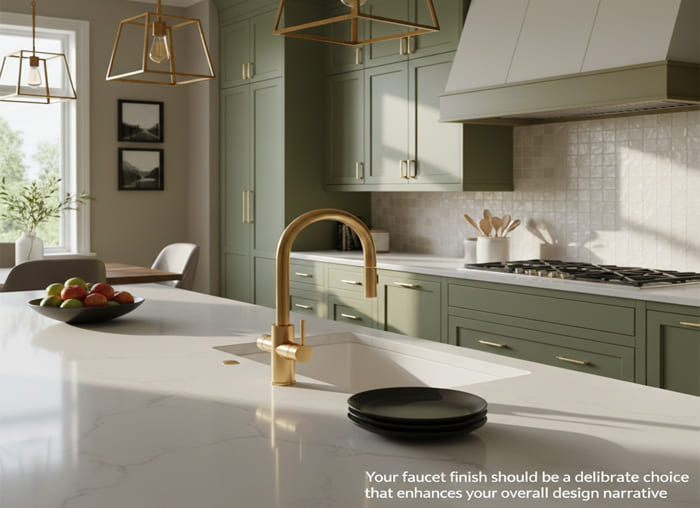
Your faucet finish should be a deliberate choice that enhances your overall design narrative. Here’s a simple guide to pairing finishes with popular aesthetics.
| Bathroom Style | Primary Finish Recommendations | Why It Works for You |
|---|---|---|
| Modern Minimalist | Polished Chrome, Brushed Nickel | These finishes emphasize clean lines, geometric forms, and a sense of impeccable cleanliness without creating visual clutter. |
| Luxury Hotel / Spa | PVD Brushed Gold, Champagne Bronze | These warm, luminous finishes pair beautifully with marble or quartz, creating an atmosphere of opulence and sophisticated indulgence. |
| Industrial / Vintage | Matte Black, Antique Bronze, Gunmetal | These dark, often matte finishes complement raw materials like concrete, brick, and reclaimed wood, adding a bold, utilitarian edge. |
| Natural / Japandi | Matte White, Matte Black, Brushed Nickel | These soft, non-reflective finishes blend seamlessly with natural materials like light wood and stone, promoting a calm, serene environment. |
Pro Designer Tip: Don’t be afraid to mix metals, but follow the 80/20 rule. Choose one dominant finish (e.g., Matte Black for your faucets and shower) and one accent finish (e.g., Brushed Gold for light fixtures and cabinet pulls). This creates a curated, intentional look rather than a chaotic one.
Core Performance: A Head-to-Head Comparison
Beauty is one thing; daily performance is another. This table breaks down the crucial differences that will affect you long after installation.
| Finish Type | Durability (10=Highest) | Ease of Cleaning (10=Easiest) | Relative Cost | Best For… |
|---|---|---|---|---|
| PVD Coating | 10/10 | 8/10 | High | High-traffic areas, luxury applications, and anyone wanting maximum longevity. |
| Quality Electroplating | 8/10 | 7/10 | Medium | All-purpose use where a classic, reliable shine is desired. A great value standard. |
| Brushed Finishes | 7/10 | 9/10 | Medium | Family bathrooms, busy powder rooms, and anyone who dislikes seeing water spots. |
| Powder Coating | 8/10 | 6/10 | Medium-High | Achieving bold, modern color statements (especially matte black). |
| Living Finishes | 3/10 | 2/10 | High | Niche, historically-themed projects where patina is a desired feature, not a flaw. |
Hidden Dangers: 3 Faucet Finish Traps to Avoid
As manufacturers, we see the consequences of poor choices every day. Here are the most common mistakes to steer clear of.
1. The Low-Price Trap
A surprisingly cheap faucet in a premium finish like PVD Gold or Matte Black is a major red flag. To cut costs, unscrupulous manufacturers will:
- Use thinner coatings: A PVD finish should be several microns thick. Cheap versions are “flash coated” and will wear off quickly.
- Use inferior base materials: Using a zinc or iron alloy instead of solid brass under the plating will lead to “bubbling” and catastrophic corrosion from the inside out.
- Result: Your beautiful black faucet will have peeling edges and rusty spots within months. Always prioritize a reputable supplier over a suspiciously low price.
2. The Environmental Mismatch
Your local environment plays a huge role in how a finish performs.
- Coastal or High-Humidity Areas: The salt and moisture in the air are highly corrosive. Avoid any faucet with a ferrous (iron-based) material. Your best defense is a solid SUS304 stainless steel base material combined with a PVD finish.
- Hard Water Areas: Water rich in calcium and magnesium will leave white, chalky deposits (limescale). These are far more visible on dark, matte surfaces like Matte Black or Oil-Rubbed Bronze. If you have hard water, a Brushed Nickel or Polished Chrome finish will be much more forgiving.
3. The Design & Lighting Clash
Always get samples! A finish can look completely different in your home than it does in a showroom.
- Example 1: A warm Brushed Gold faucet can look jarring against cool-toned grey porcelain tiles.
- Example 2: A Matte Black faucet in a small, poorly lit powder room can feel heavy and absorb light, making the space feel smaller and more somber. Ensure you have adequate task and ambient lighting.
The OEM/ODM Advantage: Customization is Key
For plumbers, developers, and brand owners, having a flexible manufacturing partner is crucial. The market demands variety, and your supplier should be able to deliver.
As an OEM/ODM specialist, SpringFaucet excels at this. We don’t just offer a fixed catalog; we work with our clients to produce faucets that meet their specific market needs.
- Need a PVD Gold finish on a SUS304 stainless steel body for a coastal hotel project? We can do that.
- Want to develop a proprietary Matte White finish for your new brand? We have the R&D capabilities.
- Require faucets certified for different international standards? Our products are already favored by plumbers globally for their reliability and adaptability.
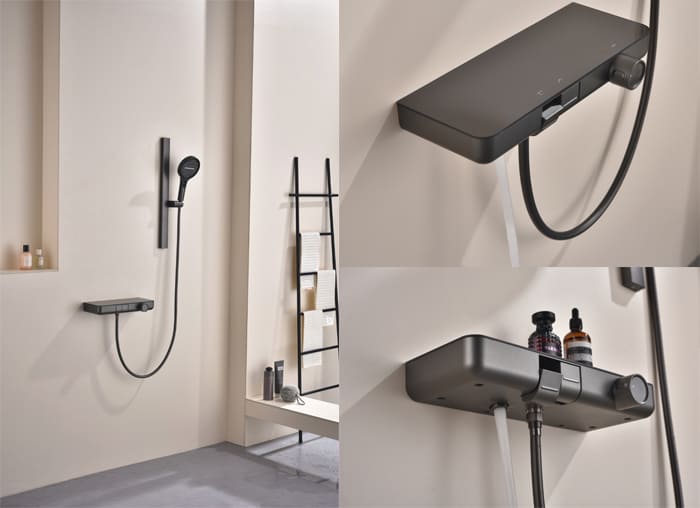
Our ability to customize everything from the base material to the final finish is why we are a trusted partner for businesses worldwide. Explore our versatile range, like the SpringFaucet Wall-Mount Shower Faucet collection, to see the quality and variety we can produce.
The Future of Faucet Finishes: Smart & Sustainable Surfaces
The technology is constantly evolving. Here’s a glimpse of what’s next:
- Hydrophobic & Oleophobic Coatings: Nano-coatings that actively repel water and oils, dramatically reducing water spots and fingerprints.
- Antibacterial Surfaces: Finishes infused with materials like silver ions that inhibit the growth of germs and bacteria, a major focus for healthcare and hospitality.
- Eco-Friendly Processes: New PVD and plating techniques that use fewer hazardous chemicals and recycle water, reducing the environmental footprint of manufacturing.
Frequently Asked Questions (FAQ)
Q1: What is the most durable faucet finish? Hands down, a properly applied PVD (Physical Vapor Deposition) finish over a quality base material like solid brass or stainless steel is the most durable option available today. It is exceptionally resistant to scratches, fading, and corrosion.
Q2: Is matte black a trend or is it here to stay? While it surged in popularity as a trend, Matte Black has established itself as a new classic. Like chrome or brushed nickel, it has become a standard offering that provides a timeless, modern look. Its success has paved the way for other matte finishes like white and gunmetal.
Q3: Can I change the finish on my existing faucet? Technically, it’s possible to have a faucet re-plated, but it is almost always prohibitively expensive and impractical for a consumer. The cost of stripping the old finish, polishing the base metal, and applying a new one often exceeds the price of a brand new, high-quality faucet.
Conclusion: A Finish for the Future
Your faucet finish is the handshake of your bathroom—it’s the first thing you see and the part you interact with most. By looking beyond simple color and understanding the technology, performance, and style implications, you can make a choice that brings you joy for years.
Whether you opt for the timeless brilliance of Polished Chrome, the low-maintenance practicality of Brushed Nickel, the bold statement of Matte Black, or the unmatched durability of a PVD Gold, prioritize quality from a reputable source. This ensures your chosen finish will not only define your space today but will also stand the test of time.
Recommended Links
Internal Links:
- The Ultimate Guide to SUS304 Stainless Steel Faucets
- How to Remove a Faucet Aerator
- How to Choose Bathtub Shower Faucets
External Links (Authoritative Sources):
- ASTM International: An organization that sets technical standards for materials, including standards for plating thickness and corrosion testing (e.g., ASTM B456 for electroplated coatings).
- Powder Coating Institute (PCI): The leading authority on powder coating technology, benefits, and applications.
- PVD Coatings Explained by Scientific American: A simplified explanation of the PVD process from a trusted scientific source.