
Choosing a bathtub is one of the most significant decisions you’ll make for your bathroom renovation. It’s about far more than just size and shape; it’s a long-term investment in your comfort, your home’s value, and your daily relaxation. The right choice involves a careful consideration of materials, design, installation type, and functionality.
As faucet manufacturers, we see the bathtub and its faucet as two halves of a complete system. The tub you choose dictates the type of faucet you need, and the right pairing is what elevates a simple bathroom into a luxurious personal spa. This guide will provide you with the expert knowledge to navigate every step of the process, ensuring you select a bathtub you’ll love for years and pair it with the perfect water delivery system.
Last Updated: Dec 2025 | Estimated Reading Time: 17 minutes
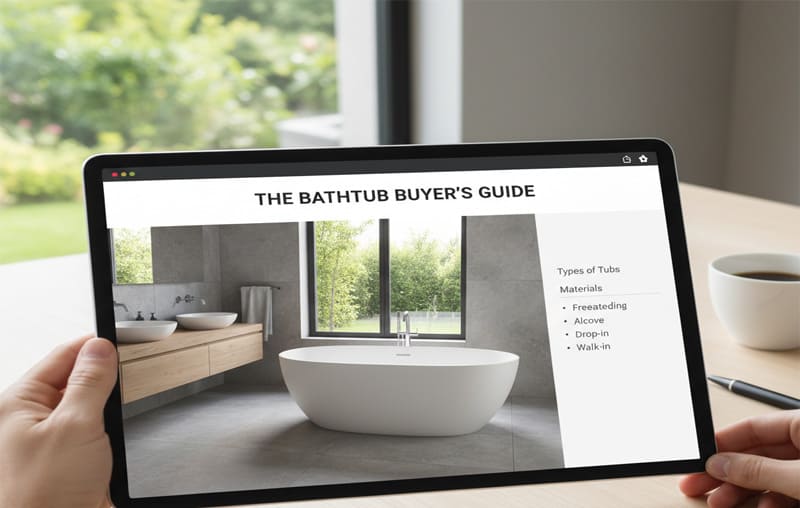
In This Ultimate Bathtub Selection Guide, You’ll Discover:
- A detailed breakdown of the 6 primary bathtub materials, from acrylic to stone resin.
- The critical differences between freestanding, alcove, and drop-in bathtubs.
- How to match the perfect faucet type—floor-mounted, wall-mounted, or deck-mounted—to your tub.
- An inside look at the latest 2025+ trends, including smart bathtubs and sustainable designs.
- Practical cost and installation estimates to help you budget effectively.
- Solutions to common bathtub problems to ensure longevity.
Pillar 1: Bathtub Materials – The Foundation of Your Bathing Experience
The material of your bathtub determines its heat retention, durability, weight, and overall feel. This is the most important decision you will make.
| Material | Heat Retention | Durability | Feel & Comfort | Typical Cost (Tub Only) |
|---|---|---|---|---|
| Acrylic | Very Good | Good (Resists chipping) | Warm to the touch, lightweight | $$ (Affordable to Mid) |
| Fiberglass (FRP) | Fair | Fair (Prone to scratching) | Flexible, lightweight | $ (Most Affordable) |
| Enameled Cast Iron | Excellent | Excellent (Resists scratching) | Solid, substantial, can be cold initially | $$$$ (Expensive) |
| Enameled Steel | Fair | Good (Can chip under impact) | Solid but lighter than cast iron | $$ (Affordable) |
| Stone Resin | Excellent | Excellent (Often repairable) | Silky, smooth, luxurious | $$$$$ (Luxury) |
| Wood | Good | Fair (Requires high maintenance) | Natural, warm, unique | $$$$$ (Custom/Luxury) |
Acrylic: The Versatile All-Rounder
Acrylic tubs are made from vacuum-formed sheets of acrylic, reinforced with fiberglass. They are the most popular choice on the market for a reason.
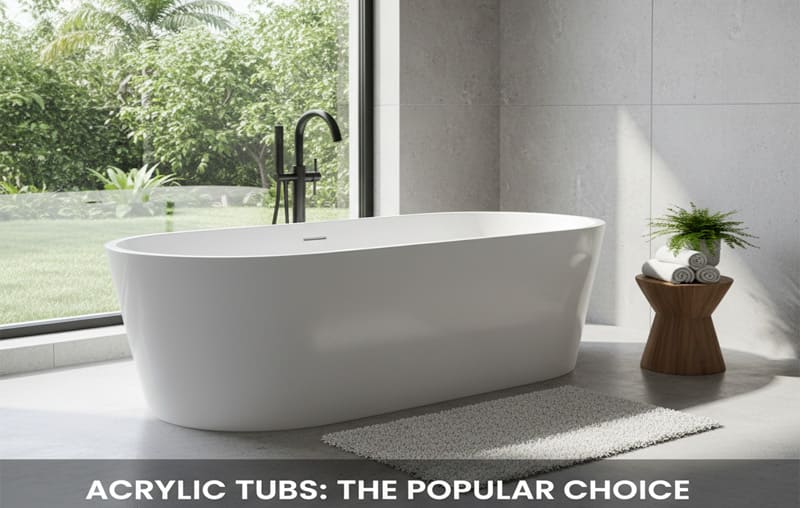
- Pros: Lightweight, warm to the touch, available in a vast range of shapes and sizes, resistant to chipping and fading. The non-porous surface is easy to clean.
- Cons: Can be scratched by abrasive cleaners, may feel less “solid” than cast iron or stone.
- Best For: Most bathrooms. Its versatility makes it ideal for everything from standard alcove tubs to modern freestanding designs.
Fiberglass: The Budget-Friendly Option
Fiberglass (or Fibre-Reinforced Plastic – FRP) is made by spraying gelcoat over a mold. It’s the most inexpensive material available.
- Pros: Very affordable, extremely lightweight, easy to install.
- Cons: The surface is porous and prone to scratching, staining, and cracking over time. It has poor heat retention.
- Best For: Low-traffic guest bathrooms or projects with a very tight budget.
Enameled Cast Iron: The Timeless Classic
These tubs are made by pouring molten iron into a mold, then coating it with a thick layer of enamel. They are the heavyweights of the bathtub world.
- Pros: Unmatched durability and scratch resistance. The thick iron retains heat exceptionally well once warmed up. It has a substantial, high-end feel.
- Cons: Extremely heavy, often requiring floor reinforcement. The enamel can be cold to the touch initially and can chip from a heavy impact (and is difficult to repair).
- Best For: Creating a traditional, enduring bathroom. Perfect for those who want a “buy it once, buy it for life” product.
Stone Resin: The Modern Luxury
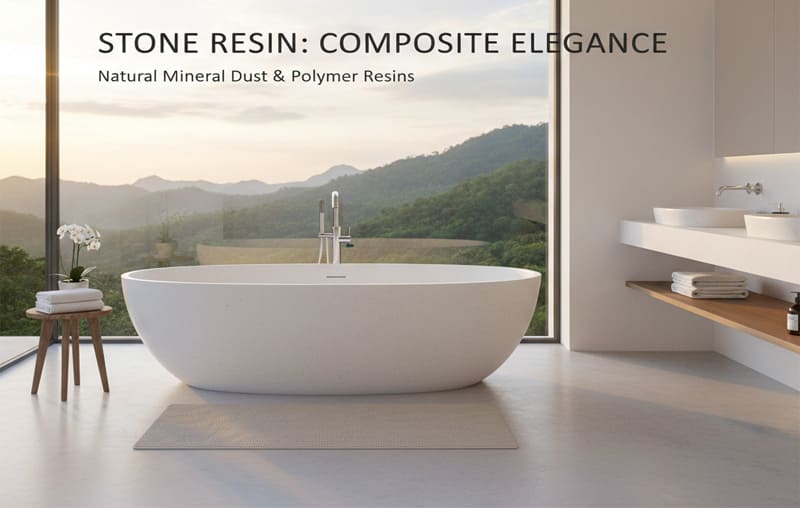
Also known as solid surface, stone resin is a composite material made from natural mineral dust (like marble or quartz) mixed with polymer resins.
- Pros: Incredible design flexibility, allowing for sleek, sculptural shapes. Excellent heat retention. The surface is velvety smooth and warm. Most scratches can be buffed out.
- Cons: Very heavy (though often lighter than cast iron) and carries a premium price tag.
- Best For: High-end, contemporary bathrooms where the bathtub is the focal point.
Insider Tip: The luxurious feel of a stone resin freestanding tub is best complemented by a faucet of equal quality. A solid brass, floor-mounted tub filler not only looks stunning but also has the durability to match.
Pillar 2: Bathtub Types & Designs – Finding Your Perfect Fit
Once you’ve chosen a material, you need to select the installation type and functional style that works for your space and needs.
By Installation Type
- Freestanding Bathtubs: These are finished on all sides and stand alone as a bathroom centerpiece. They require a floor-mounted or wall-mounted tub filler.
- Alcove Bathtubs (Skirted): The most common type, designed to fit into a three-walled enclosure. They have a finished front panel (skirt) and are typically paired with a wall-mounted faucet and shower combination.
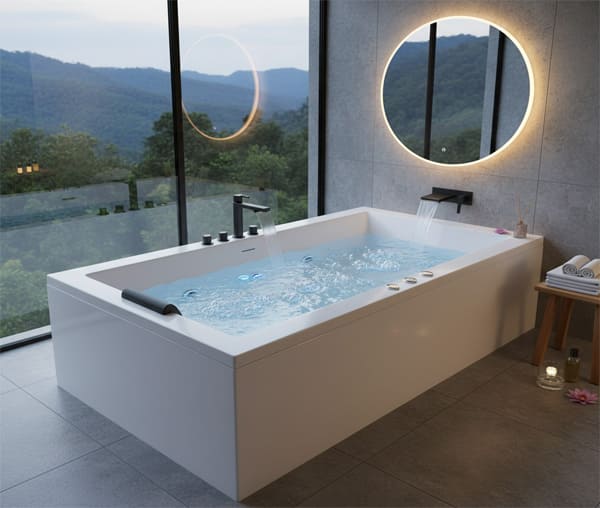
- Drop-In Bathtubs (Embedded): These tubs have no finished sides and are designed to be “dropped into” a custom-built surround or deck. The faucet is usually deck-mounted on the surround.
By Function & Shape
- Standard Tubs: Your typical alcove tub, often combined with a shower. Functional and space-saving.
- Soaking Tubs: Deeper than standard tubs, designed for full-body immersion. Available in all installation types.
- Whirlpool & Air Tubs: Equipped with jets that shoot water (whirlpool) or air (air tub) for a hydro-therapeutic massage.
- Japanese Soaking Tubs (Ofuro): Characterized by a much deeper, more compact design, allowing you to sit upright while submerged to your shoulders.
Pillar 3: The Perfect Pairing – What Faucet Goes with Your Bathtub?
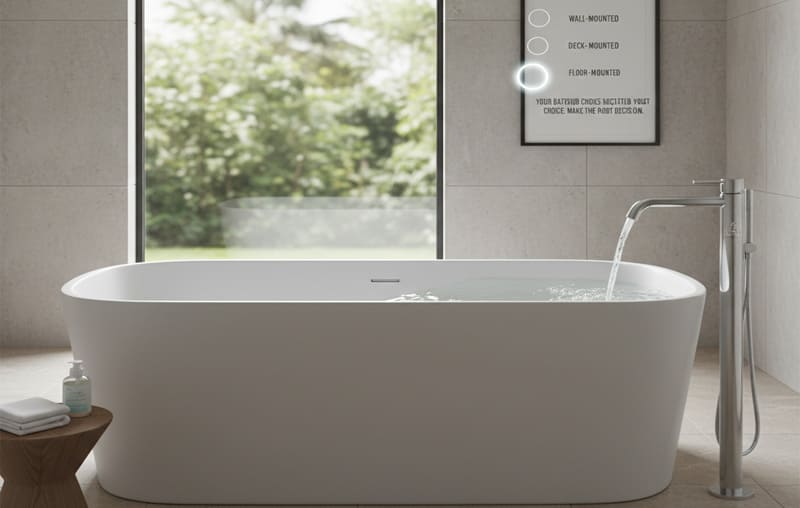
This is where our expertise as faucet manufacturers is critical. Your bathtub choice dictates your faucet choice. Making the wrong decision can lead to costly plumbing changes.
| Faucet Type | Installation Location | Paired With These Bathtub Types | Why You’d Choose It |
|---|---|---|---|
| Floor-Mounted Tub Filler | On the floor beside the tub. | Freestanding Tubs | Creates a dramatic, luxurious statement. Offers placement flexibility. |
| Wall-Mounted Faucet | On the wall above the tub. | Alcove Tubs, Freestanding Tubs placed near a wall. | Space-saving and easy to clean around. Standard for tub/shower combos. |
| Deck-Mounted Faucet | On the rim of the tub or the surrounding deck/platform. | Drop-In Tubs, some Freestanding Tubs with wide rims. | A classic, integrated look. Keeps plumbing concealed within the deck. |
The Ultimate Statement: The Freestanding Tub Filler
For a freestanding tub, nothing compares to the elegance of a floor-mounted filler. It acts as a piece of functional sculpture. When investing in a beautiful freestanding tub, pairing it with a high-quality filler is non-negotiable. Look for models made from solid brass with a ceramic disc cartridge for durability.
A brand like SpringFaucet specializes in these high-performance fixtures, offering finishes and styles that will perfectly complement your tub and ensure a flawless, leak-free bathing experience for years to come.
Pillar 4: Modern Trends & Innovations in Bathtub Design
The world of bathtubs is constantly evolving. Here are the top trends to watch:
- Smart Bathtubs: Imagine your tub filling to the perfect temperature and depth with a voice command or from an app on your phone. Brands like Kohler (PerfectFill) are leading this charge, integrating technology for ultimate convenience and control.
- Sustainable Materials: As consumers become more eco-conscious, we’re seeing a rise in tubs made from recycled materials or natural composites that have a smaller environmental footprint.
- Hygienic Finishes: Inspired by the recent focus on health, manufacturers are developing antimicrobial surfaces that inhibit the growth of mold and mildew, making tubs easier to keep clean.
- Textured Surfaces & Colors: The all-white bathroom is giving way to more personality. Matte black, stone-textured exteriors, and even two-tone tubs are becoming increasingly popular, allowing the bathtub to be a true design element.
Pillar 5: Practicalities – Installation, Maintenance & Costs
Understanding the total cost is crucial for budgeting. The price of the tub is only part of the story.
| Bathtub Type & Material | Estimated Tub Cost | Estimated Installation Cost | Total Estimated Cost |
|---|---|---|---|
| Acrylic Alcove Tub | 400−400 – 1,200 | 500−500 – 1,500 | 900−900 – 2,700 |
| Enameled Steel Alcove Tub | 300−300 – 1,000 | 500−500 – 1,500 | 800−800 – 2,500 |
| Acrylic Freestanding Tub | 800−800 – 2,500 | 700−700 – 2,000+ (complex plumbing) | 1,500−1,500 – 4,500+ |
| Cast Iron Freestanding Tub | 2,000−2,000 – 5,000+ | 1,000−1,000 – 3,000+ (incl. floor reinforcement) | 3,000−3,000 – 8,000+ |
| Stone Resin Freestanding Tub | 2,500−2,500 – 7,000+ | 800−800 – 2,500+ | 3,300−3,300 – 9,500+ |
Note: Costs are estimates for 2025 and can vary widely based on location, plumber rates, and project complexity.
Maintenance Tips:
- Acrylic: Use non-abrasive, soft cloths and gentle cleaners. Avoid scouring pads.
- Cast Iron: Very durable, but harsh chemicals can dull the enamel over time. A chipped enamel should be repaired professionally to prevent rusting.
- Stone Resin: Most minor scratches can be buffed out with a fine-grit sanding pad, making it “repairable” in a way other materials are not.
Pillar 6: Common Bathtub Problems & Simple Solutions
- Problem: Slow Drain.
- Solution: Usually caused by a clog of hair and soap scum. Use a drain snake or a mixture of baking soda and vinegar followed by hot water. Avoid harsh chemical drain cleaners, which can damage pipes.
- Problem: Leaks around the Faucet.
- Solution: This often points to a worn-out washer or O-ring inside the faucet handle or spout. These are inexpensive parts to replace. For complex cartridge faucets, it’s best to consult the manufacturer’s instructions.
- Problem: Surface Scratches (on Acrylic).
- Solution: For minor scratches, an acrylic scratch remover polish kit can often restore the finish. For deeper gouges, professional refinishing may be required.
Frequently Asked Questions (FAQs)
Q1: What is the best bathtub material for heat retention? Enameled cast iron and stone resin are the champions of heat retention. Once they are warmed by the hot water, they hold the temperature for a very long time, providing a longer, more comfortable soak.
Q2: Can I replace my alcove tub with a freestanding tub? Yes, but it requires significant work. You’ll need to remove the old tub and surrounding walls, refinish the floor underneath where the old tub was, and reroute the plumbing for a floor-mounted or wall-mounted filler. It’s a job for a professional contractor.
Q3: How much space do I need around a freestanding tub? A minimum of 6 inches (15 cm) on all sides is recommended for cleaning and to create a sense of visual space. For a truly luxurious feel, 12 inches (30 cm) or more is ideal.
Conclusion: Your Perfect Bath Awaits
Choosing the right bathtub is a journey of balancing aesthetics, budget, and practicality. By understanding the core differences in materials and installation types, you can confidently select a tub that will serve as the foundation of your bathroom sanctuary.
Remember, the experience is only complete with the right faucet. Whether you choose a classic alcove tub or a show-stopping freestanding model, pairing it with a high-quality, well-engineered faucet is essential. It ensures reliable performance, completes your design vision, and transforms a simple utility into a daily ritual of comfort and relaxation. Explore the possibilities and build the bathroom of your dreams.
Recommended Links
Internal Links:
- Our Faucets: Find the Perfect Freestanding and Wall-Mounted Tub Fillers at SpringFaucet
- Blog: Freedstanding Tub Faucets: The Ultimate Buyers’s Guide
- About Us: Our Commitment to Solid Brass Construction and Quality Engineering
External Links (Authoritative Sources):
- Wikipedia: Bathtub – A comprehensive overview of the history and types of bathtubs.
- NKBA (National Kitchen & Bath Association) Planning Guidelines – Official industry guidelines for bathroom layout and spacing.
- ASTM International – The organization that sets performance standards for plumbing fixtures, including materials like acrylic (Standard F462).