
Choosing the right faucets for your bathtub and shower is one of the most impactful decisions you’ll make in your bathroom renovation. It’s a choice that blends critical functionality with the defining aesthetic of your space. But with countless options—from mounting types and handle configurations to a vast new world of colors—the process can feel overwhelming.
This guide is designed to eliminate that confusion. As a manufacturer with decades of experience in OEM and ODM faucet production for global markets, we’re pulling back the curtain to give you an insider’s perspective. We’ll walk you through every technical consideration and style trend, empowering you to select a faucet system that is not just beautiful, but perfectly engineered for your needs, your bathroom, and your budget.
Last Updated: Feb 2026 | Estimated Reading Time: 13 minutes
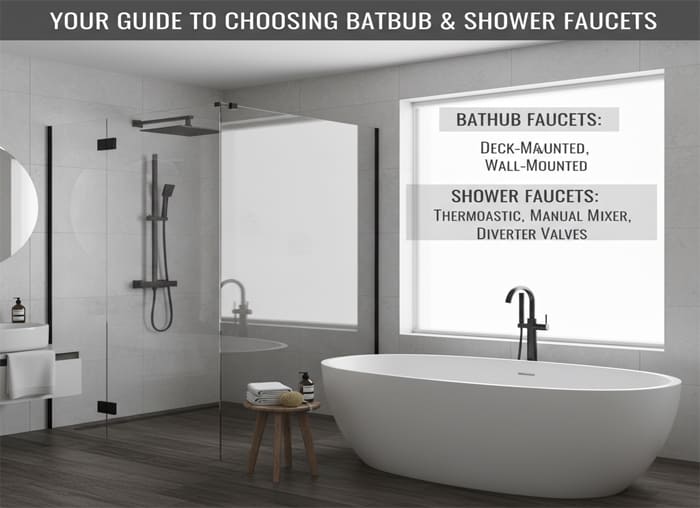
In This Ultimate Faucet Guide, You Will Discover:
- The 3 main types of bathtub faucets and which is right for your tub.
- The critical difference between exposed and concealed shower systems.
- How to choose the perfect handle configuration for your family’s needs.
- A guide to the latest 2025 color and finish trends, from Matte Black to PVD Gold.
- Insider tips on coordinating your new faucets with your overall bathroom design.
The First Big Decision: Understanding Bathtub Faucet Mounting Types
The first step is determining how the faucet will physically connect to your water supply and your tub. This is dictated by the type of bathtub you have and your plumbing setup. There are three primary mounting types.
1. Freestanding Tub Faucets (Floor-Mounted)
A freestanding faucet, or tub filler, is a tall, dramatic fixture that rises directly from the floor. It is the necessary and perfect companion for a standalone bathtub that has no faucet deck or adjacent wall.
Key Advantages for You:
- Design Statement: It’s a sculptural centerpiece that elevates the entire bathroom’s aesthetic.
- Placement Flexibility: It can be positioned in various locations around the tub for optimal comfort and visual impact.
- All-in-One Solution: Most models include an integrated hand shower, adding spa-like functionality for rinsing or cleaning.
This style has become a global bestseller, particularly in markets that value modern, luxurious design. As an OEM/ODM manufacturer, we’ve seen explosive growth in demand for these fixtures. Our SpringFaucet Freestanding Bathtub Faucets are among our most popular exports, sought after for their robust engineering and sleek designs that meet international standards.
2. Wall-Mounted Tub Faucets
As the name suggests, these faucets are installed on the wall above the bathtub. They provide a clean, integrated look and are an excellent choice for tubs placed directly against a wall.
Key Advantages for You:
- Space-Saving: They keep the area around the tub deck completely clear, creating a minimalist feel.
- Easy Cleaning: With no faucet base on the tub rim, cleaning the tub surface is much simpler.
- Modern Aesthetic: They pair exceptionally well with built-in tubs and contemporary bathroom designs.
Manufacturer’s Tip: For wall-mounted faucets, planning is crucial. The plumber must install a specific in-wall valve and position the water lines at the correct height before the wall is tiled. The spout length must also be chosen carefully to ensure it clears the tub rim adequately.
3. Deck-Mounted Tub Faucets
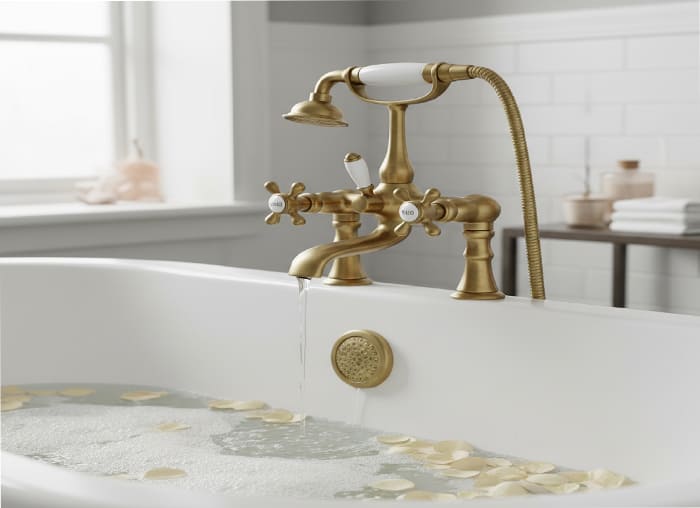
These are the most traditional type, mounted directly onto the rim or “deck” of the bathtub itself. They require a tub with pre-drilled holes or a wide enough rim to accommodate drilling.
Key Advantages for You:
- Classic Appeal: They offer a timeless look that works well with many drop-in or undermount tub styles.
- Hidden Plumbing: All the water lines and connections are neatly concealed beneath the tub deck.
- Variety: Available in a wide range of configurations, from a single-piece unit to a wide-spread 4-hole set with separate handles and a hand shower.
| Faucet Mount Type | Best For You If… | Installation Notes |
|---|---|---|
| Freestanding (Floor-Mount) | You have a standalone tub and want a bold, luxurious statement piece. | Requires plumbing to be run under the floor to the faucet location. |
| Wall-Mount | You have a built-in tub against a wall and desire a clean, modern, space-saving look. | Requires precise in-wall valve installation before tiling. |
| Deck-Mount | Your tub has a wide rim (deck) or pre-drilled holes for a classic, integrated look. | Easiest to install if tub holes are pre-drilled; requires access under the tub. |
Decoding Your Shower: Exposed vs. Concealed Systems
Once you’ve sorted your tub faucet, it’s time to consider the shower. The main choice here is between a system where the plumbing is visible (exposed) or hidden (concealed).
1. Exposed Shower Faucets
In an exposed system, the pipe that connects the valve to the showerhead is mounted on the outside of the wall. This creates a distinct, often industrial or vintage, aesthetic.
Key Advantages for You:
- Easy Installation: Ideal for retrofits and renovations, as they don’t require opening up the wall.
- Cost-Effective: Installation is typically less labor-intensive, saving on costs.
- Distinct Style: Offers a unique utilitarian or classic look that is popular in farmhouse, industrial, and traditional designs.
2. Concealed Shower Systems (In-Wall)
This is the most common choice for modern bathrooms. All the plumbing and the main valve body are hidden inside the wall. The only visible parts are the decorative trim: the handle(s) and the showerhead.
Key Advantages for You:
- Sleek, Minimalist Look: Creates an uncluttered, high-end appearance that is easy to clean.
- Design Flexibility: Allows for mixing and matching components. You can place the control valve in one spot and the showerhead or body sprays elsewhere.
- The Modern Standard: This is the preferred system for new construction and high-end renovations.
3. Bathtub and Shower Faucet Combinations
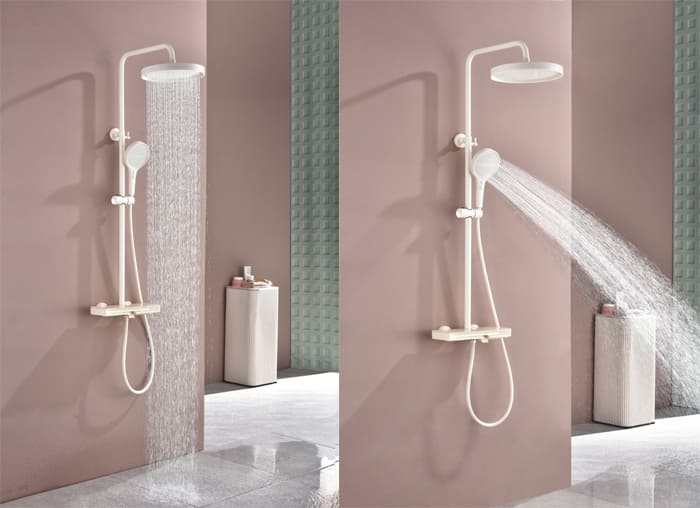
This ubiquitous, space-saving solution combines a tub spout and a showerhead into one unit, controlled by the same valve. A diverter (a knob or pin) is used to switch the water flow between the two.
Key Advantages for You:
- Space Efficiency: Perfect for the standard alcove tub found in most homes and apartments.
- Budget-Friendly: One valve and one installation serve two functions, making it a highly economical choice.
- Simplicity: A straightforward, all-in-one solution that gets the job done effectively.
The Control Center: Choosing Your Handle Configuration
The way you interact with your faucet daily depends on its handle setup. Each configuration offers a different user experience.
| Handle Type | How It Works | Why You Might Choose It |
|---|---|---|
| Single Handle | A single lever controls both water volume (up/down) and temperature (left/right). | Ultimate Simplicity. Easy for all ages to use and allows for one-handed operation. Excellent for fine-tuning temperature. |
| Two Handles | Separate handles for hot and cold water. | Classic & Intuitive. Simple, clear separation of hot and cold. Common in traditional and transitional styles. |
| Three Handles | Two handles for hot/cold, plus a third handle that acts as the diverter. | Clear Function Separation. The diverter is a dedicated handle, not a small knob, offering a robust and clear way to switch functions. |
Defining Your Style: 2025 Trends in Faucet Design & Finishes
Faucet aesthetics have evolved dramatically. The ornate, classical styles once common in French or English-inspired decor are now niche. Today, the market is dominated by clean, minimalist designs that emphasize material and form.
The Rise of Simplified & Angular Forms
- Minimalist Mainstream: Simple, sleek lines and uncluttered forms are the go-to style for modern homes. They are versatile and create a sense of calm and sophistication.
- The Power of Square: Angular, geometric designs have become incredibly popular. The combination of the metallic texture and sharp, square shapes creates a powerful, architectural look that perfectly complements modern vanities and tile work.
The New Color Palette
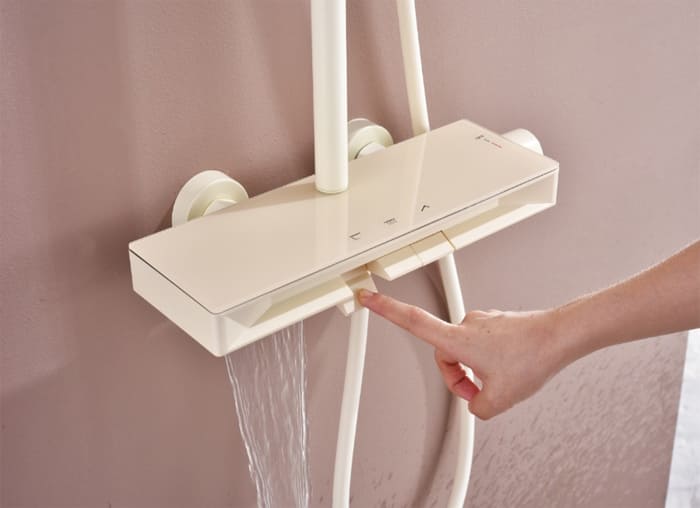
The days of being limited to Polished Chrome, Brushed Nickel, and Bronze are over. Advanced finishing technologies have unlocked a world of color.
- Matte Black: The undisputed king of modern finishes. It’s bold, versatile, and creates a stunning contrast with white tile or light wood tones.
- PVD Finishes (Gold, Rose Gold, Gunmetal): Physical Vapor Deposition (PVD) is a high-tech process that bonds the finish to the faucet at a molecular level. This makes it incredibly durable and allows for stunning metallic hues like Brushed Gold, warm Rose Gold, and sophisticated Gunmetal grey.
Interior Designer’s Tip: When using these bold new colors, coordination is key. The faucet finish should be a deliberate choice that complements the vanity hardware, lighting fixtures, and even the mirror frame. The goal is a unified, harmonious, and intentional design.
As an OEM/ODM factory, SpringFaucet is at the forefront of these trends. We have the capability to produce our entire faucet range in any of these modern finishes, allowing our B2B partners to offer their customers precisely what the market demands.
Frequently Asked Questions (FAQ)
Q1: What is a thermostatic shower valve? A thermostatic valve is an advanced in-wall shower valve that automatically maintains the water temperature you select. It senses and compensates for pressure or temperature changes in your home’s water lines (e.g., when a toilet is flushed), preventing scalding or sudden cold shocks. It’s a significant upgrade in safety and comfort.
Q2: Can I change my faucet finish later? No, the finish is a permanent part of the faucet. If you want to change the color, you must replace the entire fixture. This is why choosing the right finish from the start is so important for the long-term satisfaction with your bathroom design.
Q3: My bathroom has low water pressure. What should I look for? Look for faucets and showerheads specifically designed for low-pressure systems. Check the product’s technical specifications for its minimum required operating pressure (often measured in Bar or PSI). Avoid “rain” style showerheads with very large diameters, as they require significant pressure to perform well.
Conclusion: Making the Right Choice for Your Home & Business
Selecting the perfect bathtub and shower faucets is a journey of balancing practicality with personal style. By understanding the fundamental differences in mounting types, control systems, and modern design trends, you can move forward with confidence.
For Homeowners: Start by identifying your tub type to narrow down your mounting options. Then, consider who will be using the shower to choose the most user-friendly handle configuration. Finally, select a style and finish that not only looks beautiful today but also harmonizes with your entire bathroom vision.
For Our B2B Partners: The market is clear. Demand for minimalist designs, bold finishes like Matte Black and PVD Gold, and high-function fixtures like freestanding tub fillers is stronger than ever. Partnering with a flexible OEM/ODM manufacturer like SpringFaucet gives you direct access to these trends, allowing you to build a product portfolio that is perfectly aligned with the needs of your specific country and market.
Recommended Links
Internal Links:
- The Ultimate Guide to SUS304 Stainless Steel Faucets
- The Ultimate Bathroom Accessories List
- How to Choose A Bathtub Expert Buying Guide
External Links (Authoritative Sources):
- NKBA – National Kitchen & Bath Association – A leading authority on bathroom design trends and professional standards.
- Plumbing Manufacturers International (PMI) – An organization dedicated to plumbing product safety, performance, and regulations.
- Wikipedia: Thermostatic Mixing Valve – For a technical understanding of this advanced shower technology.