
Choosing a new shower system is about more than just picking out hardware; it’s about designing the soul of your bathroom. The right system elevates your daily routine from a simple task to a restorative ritual, enhances your property’s value, and serves as a stunning focal point. But with an overwhelming array of options—from simple exposed showers to complex smart systems—how do you find the one that’s truly perfect for you?
This is your definitive decision map. We will guide you step-by-step through the four essential pillars—Style, Function, Budget, and Space—to demystify the process. Whether you’re renovating, building new, or simply upgrading, this guide will empower you to select a shower system that you’ll love for years to come.
Last Updated: March 2026 | Estimated Reading Time: 15 minutes
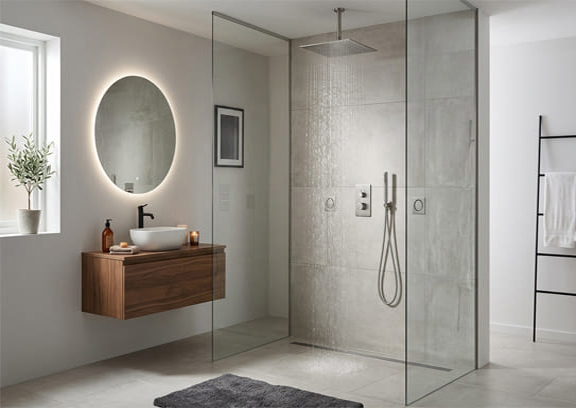
This Guide Will Help You:
- Match a shower system to your specific interior design style.
- Understand the core differences between exposed, concealed, and integrated systems.
- Decode technical terms like “thermostatic valve” and “PVD finish.”
- Set a realistic budget and know what features to expect at each price point.
- Assess your home’s technical requirements like water pressure and plumbing.
Step 1: Define Your Bathroom’s Style
Your shower system is a key design element. It must harmonize with your bathroom’s overall aesthetic to create a cohesive and intentional look. Let’s identify your style.
Modern & Minimalist
- Keywords: Clean lines, geometric shapes, metallic finishes (Chrome, Brushed Nickel, Matte Black).
- Recommended Systems: A concealed (in-wall) shower system is the ultimate choice for minimalism, hiding all plumbing for a clutter-free look. Pair it with a large, ultra-thin square or round rainfall shower head.
- Avoid: Ornate, vintage details or overly complex controls.
Industrial
- Keywords: Raw textures, exposed structures, vintage mechanical elements.
- Recommended Systems: An exposed pipe shower system is perfect, celebrating the beauty of the plumbing itself. Opt for finishes like Matte Black, Oil-Rubbed Bronze, or raw brass to enhance the utilitarian aesthetic.
- Avoid: Polished chrome and plastic components that detract from the raw, authentic feel.
Scandinavian / Natural
- Keywords: Fresh, bright, light woods, natural stone.
- Recommended Systems: Choose systems with simple forms in Matte White, Brushed Nickel, or Chrome. An exposed shower column with an integrated wooden shelf can be a beautiful and functional addition.
- Avoid: Heavy, dark colors or elaborate, classical designs.
Luxury / Hotel-Chic
- Keywords: Sophisticated, premium feel, smart technology, spa experience.
- Recommended Systems: A multi-function concealed system is key. Think large ceiling-mounted rainfall heads, multiple body jets for a hydro-massage experience, and premium finishes like Brushed Gold, Rose Gold, or Gunmetal Grey.
- Avoid: Basic, entry-level materials that feel out of place with the luxury theme.
Pro Tip: Matte Black remains a top trending finish for 2026. It’s incredibly versatile, fitting equally well in Modern, Industrial, and even transitional designs. Its ability to hide fingerprints and water spots makes it a practical choice too.
Step 2: Clarify Your Functional Needs & Product Types
Beyond looks, a shower system must meet your lifestyle needs. Are you a “quick rinse and go” person, or do you crave a long, spa-like soak?
A. Core Components: The Anatomy of a Shower System
Every system is built around a few key parts. Understanding them is crucial.
- The Valve (The Engine): This is the most important part, controlling water flow and temperature. It’s hidden in the wall (concealed) or part of the external bar (exposed).
- The Shower Head (The Experience): Delivers the water. Can be a fixed rainfall head, a flexible handheld wand, or both.
- Body Jets (The Luxury): Optional smaller jets installed in the wall for a full-body massage spray.
- The Trim: The visible parts you interact with—handles, levers, and control plates.
B. Exposed vs. Concealed Systems: A Key Decision
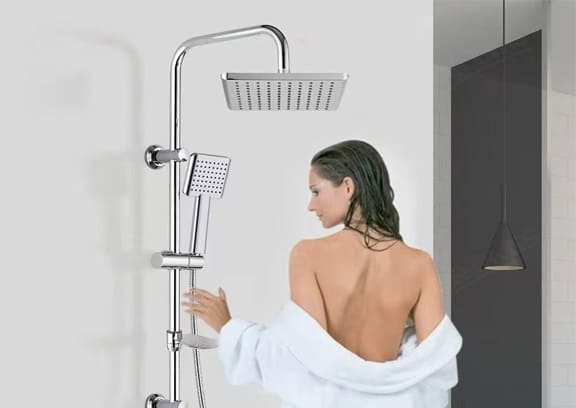
This is one of the first functional choices you’ll make.
| Feature | Exposed Shower System | Concealed (In-Wall) Shower System |
|---|---|---|
| Aesthetics | Visible pipes and valve. Creates a statement. Ideal for Industrial, Traditional, or Retro styles. | Only trim and shower heads are visible. Ultra-clean, minimalist, and space-saving. |
| Installation | Easier and less expensive to install. Mounts directly onto finished walls. Ideal for retrofits. | Complex installation. Requires opening the wall to install the valve. Must be done before tiling. |
| Maintenance | All parts are easily accessible for repair or replacement. | Valve maintenance requires accessing it through the trim plate. A major failure could require opening the wall. |
| Space | Takes up more physical and visual space in the shower. | Excellent for small bathrooms as it maximizes elbow room and creates an open feel. |
| Best For… | Renovations on a budget, specific design styles, and situations where opening walls is not an option. | New builds, full gut renovations, and anyone prioritizing a high-end, minimalist aesthetic. |
C. Valve Technology: The Unsung Hero for Safety & Comfort
The type of valve you choose dramatically affects your daily shower experience.
- Pressure-Balanced Valve: The most common type. It maintains a constant ratio of hot to cold water pressure. If someone flushes a toilet (a sudden drop in cold water pressure), the valve immediately reduces the hot water flow to prevent scalding. It’s a safety workhorse.
- Thermostatic Valve: The premium option. You set your desired temperature (e.g., 100°F / 38°C), and the valve’s internal thermostat mixes hot and cold water to deliver it perfectly, every time. It automatically adjusts to any changes in water pressure or temperature, providing ultimate comfort and safety.
Manufacturer’s Insight: For families with children or elderly members, a thermostatic valve is a non-negotiable safety feature. The slight additional cost is a small price to pay for preventing accidental burns.
Step 3: Plan Your Budget (Global Tiers)
Shower system prices vary dramatically. Here’s a breakdown of what you can expect at different investment levels, framed for a global market.
| Budget Tier | Price Range (USD) | What You Get | Best For |
|---|---|---|---|
| Entry-Level | 200−200 – 800 | Basic exposed shower columns, standard chrome finish, pressure-balanced valves, smaller overhead shower heads. Focus is on core function over form. | Rental properties, secondary bathrooms, or tight budget renovations. |
| Mid-Range | 800−800 – 2,200 | The sweet spot for value. Access to thermostatic valves, better materials (solid brass), advanced finishes (PVD Matte Black/Gold), larger rainfall heads, and entry-level concealed systems from reputable brands. | Most homeowners seeking a balance of quality, features, and price. |
| High-End | 2,200−2,200 – 6,000+ | Premium concealed systems, multi-outlet thermostatic valves (for head, hand, and jets), top-tier brands, superior PVD finishes, air-injection technology for a fuller spray, and designer aesthetics. | Master bathrooms, new custom homes, and those prioritizing a luxury spa experience. |
| Ultra-Luxury | 6,000−6,000 – 20,000+ | Fully digital, programmable systems. Touchscreen controls, personalized user presets, integrated lighting (chromatherapy), audio (Bluetooth speakers), and steam functions. | The ultimate home spa where technology and luxury are the primary goals. |
Step 4: Assess Your Space & Technical Conditions
The best system in the world is useless if it can’t be installed in your home. This reality check is crucial.
Key Technical Checks Before You Buy
- Water Pressure: This is the #1 factor. Most advanced systems, especially those with multiple outlets (like a rainfall head + body jets), require good water pressure to function properly.
- How to Check: Use a simple water pressure gauge that screws onto an outdoor tap or washing machine connection.
- Ideal Range: 45-60 PSI (3-4 Bar) is generally good.
- Action: If your pressure is below 40 PSI (2.7 Bar), you may need to choose a system designed for low pressure or install a booster pump.
- Plumbing & Wall Structure:
- Pipe Spacing: The distance between your hot and cold water pipes. The standard is 6 inches (150mm) in most of the world, but older US homes can vary. This is critical for exposed shower valves.
- Wall Type: Is your wall solid brick or hollow drywall? Concealed systems require a minimum wall depth to house the valve body. Hollow walls may need extra reinforcement (a “noggin” or wood blocking) to support the hardware.
- Space & Layout:
- Small Bathrooms: A concealed system or a compact wall-mounted shower is ideal. Avoid massive overhead shower heads that can feel imposing. A glass screen instead of a curtain will make the space feel larger.
- Large Bathrooms: You have options! Consider a walk-in shower with a large rainfall head, a freestanding tub with a separate floor-mounted shower, or a full wet room.
Sourcing for Success: A Note for Professionals & Importers
For interior designers, contractors, and B2B importers, choosing a shower system line is a strategic business decision. Your customers demand style, quality, and value. Your business needs a reliable supply chain, consistent quality control, and the flexibility to meet diverse market demands.
This is where partnering with a dedicated OEM/ODM manufacturer like SpringFaucet becomes a competitive advantage. Instead of being limited by off-the-shelf retail options, we empower you to build your brand.
- Customization is Key: We specialize in creating products tailored to your market. Need a thermostatic shower system with a specific PVD gold finish and packaging with your brand? We do that. Need a model compliant with specific regional certifications like cUPC or WaterMark? We have the expertise.
- Meeting Global Demands: Our extensive experience allows us to manufacture a wide variety of systems, from robust exposed bar showers popular in renovation markets to sophisticated concealed systems for new high-end developments.
- Quality & Reliability: As a direct manufacturer, we control the entire process, from sourcing high-quality lead-free brass to precision machining and multi-layer finishing. This ensures a product you can confidently stand behind.
For partners looking to source high-quality, durable, and beautifully designed tub and shower solutions, exploring a direct manufacturing relationship is the smartest path forward. For example, our range of Wall-Mounted Bathtub Faucets demonstrates the quality and design versatility we can bring to your product line.
FAQ: Your Top Questions Answered
Q: Is a thermostatic valve really worth the extra cost? A: Absolutely, for two main reasons: safety and comfort. It prevents dangerous temperature spikes, which is crucial for families. And the comfort of a perfectly consistent water temperature, day after day, is a luxury you’ll quickly find indispensable.
Q: What is a PVD finish, and is it better than chrome? A: PVD (Physical Vapor Deposition) is an advanced finishing process that bonds the color to the metal on a molecular level. It is significantly more durable, scratch-resistant, and corrosion-resistant than standard electroplated chrome. While chrome is a classic, PVD finishes (like Matte Black, Brushed Gold) offer superior longevity for a modern look.
Q: Can I install a rainfall shower head with low water pressure? A: It’s not recommended. Large rainfall heads need good pressure and flow to create the “drenching” effect. With low pressure, you’ll likely get weak, disappointing streams. Look for shower heads specifically designed for low-pressure environments or address the pressure issue with a booster pump first.
Your Final Decision Checklist
You’re almost there. Before you click “buy,” run through this final checklist.
- My Style Is: (e.g., Modern, Matte Black, Minimalist)
- My Must-Have Function Is: (e.g., Thermostatic control, Handheld shower)
- My Budget Is: ($____)
- My Water Pressure Is: (___ PSI / Bar)
- My Wall Is Ready For: (Exposed System / Concealed System)
- I have confirmed all necessary components (valve, trim, heads) are included.
- I have a plan for professional installation, especially for a concealed system.
Conclusion: An Investment in Daily Well-Being
Choosing the perfect shower system is a journey of balancing aesthetics, functionality, budget, and practicality. By following this guide, you’ve moved from being an overwhelmed shopper to an educated decision-maker.
Remember, this is more than a simple plumbing fixture. It’s an investment in your daily happiness, a tool for relaxation, and a defining feature of your personal sanctuary. By taking the time to research and plan, you are ensuring that for years to come, every single day can start or end with a moment of pure, refreshing bliss.
Recommended Links:
Internal Links:
- The Ultimate Guide to Faucet Finishes: PVD vs. Electroplating
- 2026 Bathroom Design Trends: A Manufacturer’s Forecast
- Water Pressure Explained: How to Fix Low Pressure in Your Home
External Links (Authoritative Sources):
- Plumbing & Drainage Institute (PDI) – An authoritative source for plumbing standards and best practices.
- IAPMO Group (cUPC Certification) – Learn about the standards that ensure plumbing product safety and compliance in North America.
- Houzz Bathroom Design Photos – A great resource for visual inspiration to help define your style.