
Curious about how to use a bidet? You’re not alone. What is a standard fixture in much of the world—from Italy to Japan to the Middle East—is becoming a popular symbol of enhanced hygiene and sustainability everywhere. But with different types available, the “how-to” can seem confusing. The simple answer is: you use a bidet to clean yourself with a targeted stream of water after using the toilet.
As manufacturers of bathroom fixtures, including high-quality bidet sprayers, we understand the mechanics and design intent behind every type. This guide will demystify the process completely. We’ll walk you through step-by-step instructions for the three main bidet systems: the classic European bidet faucet, the high-tech smart toilet, and the versatile handheld bidet sprayer.
Last Updated: Dec 2025 | Estimated Reading Time: 13 minutes
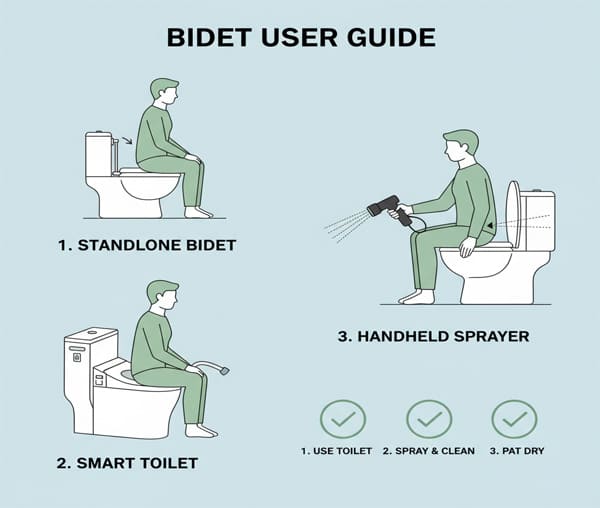
In This Ultimate Guide, You Will Learn:
- The crucial differences between the three primary bidet systems.
- Step-by-step instructions on how to use a standalone bidet, a smart toilet, and a handheld sprayer.
- Pro-tips on adjusting water temperature, pressure, and aim for a comfortable experience.
- The cultural and regional preferences that drive bidet design (e.g., Europe vs. Southeast Asia).
- Why the handheld bidet sprayer is a global workhorse and a smart investment.
First, Understand the Three Main Types of Bidets
Your “how-to” guide starts with identifying which type of bidet you’re facing. Each has a unique design and method of use, popular in different parts of the world.
| Bidet Type | How It Works | Common Regions | Pros | Cons |
|---|---|---|---|---|
| 1. Standalone Bidet (with Bidet Faucet) | A separate, low basin next to the toilet with a specialized faucet. | Europe (Italy, Germany, Spain), South America. | Precise temperature & pressure control; dedicated fixture. | Requires significant extra bathroom space and plumbing. |
| 2. Smart Toilet / Bidet Seat | An electronic toilet seat or integrated toilet with a retractable wand. | East Asia (Japan, South Korea), increasingly popular globally. | Feature-rich (heated seat, dryer, customizable wash); hands-free. | Expensive; requires electricity near the toilet. |
| 3. Handheld Bidet Sprayer | A hose with a spray nozzle mounted next to the toilet. | Southeast Asia, Middle East, Africa, South Asia. | Highly affordable, easy to install, multipurpose (can clean toilet/floor). | Typically cold water only; requires manual aiming. |
How to Use a Standalone Bidet (with Bidet Faucet) – The European Classic

This is the traditional bidet you’ll find in many European homes and hotels. It looks like a low sink or a toilet without a tank or seat.
Step-by-Step Instructions:
- Use the Toilet First: The bidet is for cleaning, not for waste. Finish your business on the regular toilet and use a small amount of toilet paper for an initial clean if you wish.
- Move to the Bidet: Straddle the bidet fixture. You can face the faucet and controls or face away, similar to a toilet. Facing the controls offers better maneuverability and control over the water.
- Adjust Temperature & Pressure: This is where the bidet faucet comes in. Just like a sink faucet, it will have hot and cold handles or a single lever.
- Start with the warm water to avoid a cold shock.
- Slowly turn the faucet on to find a comfortable water pressure. It should be a gentle stream, not a fire hose.
- Position and Aim: The key to a bidet faucet is its swivel aerator. Use your hand to pivot the nozzle at the end of the faucet to direct the stream of water precisely where you need to clean (anterior or posterior areas).
- Wash Thoroughly: Position your body over the water stream to rinse the desired areas. You can use your hand (with or without soap) to help clean, just as you would in the shower.
- Dry Off: Turn off the water. Most bathrooms with a standalone bidet will have a designated “bidet towel” on a ring or rack right next to it. Pat yourself dry. Do not use the regular hand towel.
Insider Tip: Bidet faucets are precision instruments. The best ones, often made of solid brass, allow for minute adjustments in temperature and pressure. When you first turn it on, aim the stream into the basin—not at yourself—to test the temperature before positioning your body.
How to Use a Smart Toilet or Bidet Seat – The High-Tech Solution
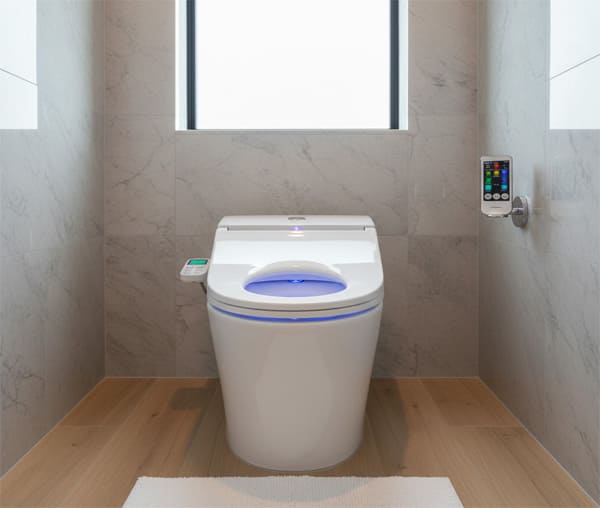
This is the easiest and most luxurious bidet experience. All functions are controlled electronically via a remote or a control panel attached to the seat.
Step-by-Step Instructions:
- Stay Seated on the Toilet: There is no need to move. After you’ve finished, you remain comfortably on the heated seat.
- Use the Control Panel: Locate the remote or the side control panel. You will see clearly labeled buttons, often with universal icons.
- “Rear Wash” / “Posterior Wash” (or an icon of a person’s backside): Press this for cleaning your posterior. A small wand will extend from the back of the seat, spray water, and then retract.
- “Front Wash” / “Feminine Wash” (or an icon of a spraying water droplet): Press this for cleaning the anterior (feminine) area. The wand will adjust its position and angle for a gentle frontal wash.
- Customize Your Wash (Optional): Most smart toilets allow you to personalize the experience. Look for buttons to:
- Adjust water pressure (
+/-). - Adjust water temperature.
- Change the nozzle position to move it slightly forward or backward for perfect aim.
- Activate an oscillating or pulsating spray for a wider cleaning area.
- Adjust water pressure (
- Use the Drying Function: Once the wash cycle is complete (it usually stops automatically after a minute), press the “Dry” or “Air Dry” button (often with a fan icon). A gentle stream of warm air will dry the area. You can use a small amount of toilet paper to pat dry if needed.
- Flush and Go: The wand self-cleans before and after each use. Simply flush the toilet (many smart toilets do this automatically) and you’re done.
How to Use a Handheld Bidet Sprayer – The Versatile Global Workhorse
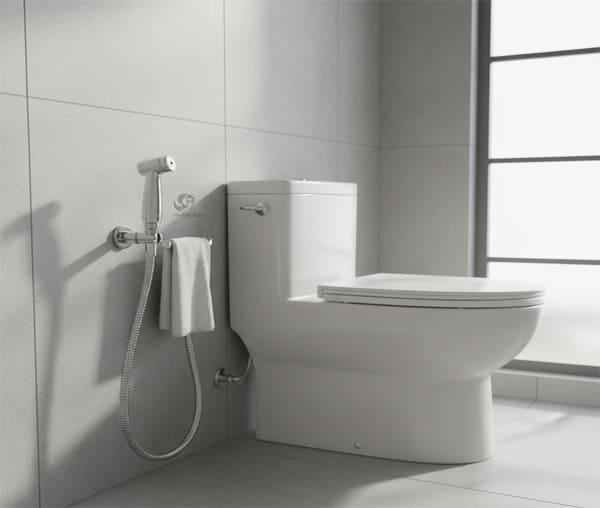
This is an incredibly popular, practical, and affordable option, and it’s our area of manufacturing expertise. It consists of a spray head on a flexible hose, mounted on the wall or the side of the toilet tank.
Step-by-Step Instructions:
- Remain Seated (or Slightly Hover): You can stay seated on the toilet. There’s no need to get up.
- Open the T-Valve: This is the most important step! There is a small shut-off valve (a T-shaped valve) where the sprayer hose connects to the toilet’s water line. Turn this lever to the “On” position. Failing to turn it off after use is the #1 cause of leaks.
- Grab the Sprayer & Test the Pressure: Hold the sprayer head and point it down into the toilet bowl. Gently press the trigger or thumb lever to test the water pressure. These can be powerful. Start with a light squeeze until you find a comfortable pressure.
- Position and Aim: This is the part that requires a little practice. You can either:
- Reach from the front, between your legs, and aim the spray backward.
- Reach from behind your back and aim the spray forward.
- Most users find reaching from the front to be easier and more intuitive.
- Wash: Gently squeeze the lever to spray the target area. Move the sprayer around slightly to ensure a thorough cleaning. You only need a few seconds.
- Release and Turn Off: Release the lever to stop the water flow. Give yourself a little shake to drip excess water into the bowl. Crucially, turn the T-valve back to the “Off” position.
- Dry: Pat dry with a few squares of toilet paper or a dedicated bidet towel.
Why the Handheld Sprayer Dominates Markets
As manufacturers, we see firsthand why the handheld bidet sprayer is a top-seller in Southeast Asia, the Middle East, and Africa, and is rapidly growing elsewhere.
- Affordability: It offers the benefits of a bidet for a fraction of the cost of other systems.
- Easy Installation: It can be installed by most homeowners in under 20 minutes with no special plumbing.
- Multi-Purpose Use: The 1.2-meter hose is incredibly useful for cleaning the toilet bowl, rinsing cloth diapers, washing muddy boots, or cleaning the bathroom floor.
- Water Pressure Control: The manual lever gives you infinite control over pressure, from a gentle trickle to a powerful jet.
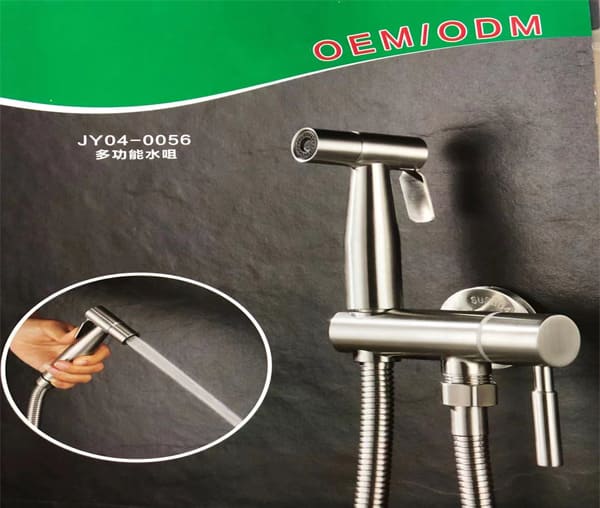
This versatility and value are why we at SpringFaucet specialize in a wide range of bidet sprayers, offering durable options in solid brass, stainless steel, and ABS to meet any market demand.
| Feature | Handheld Bidet Sprayer Advantage |
|---|---|
| Cost-Effectiveness | The lowest entry cost of any bidet system, providing exceptional return on investment for hygiene. |
| Installation | Simple DIY installation using a T-valve on the existing toilet water supply. No plumber needed. |
| Versatility | Beyond personal hygiene, it functions as a powerful utility tool for overall bathroom cleaning. |
Bidet Etiquette and Best Practices
- Do a Test Run: If you’re new to a bidet, do a quick test spray into the basin or toilet bowl to gauge the pressure and temperature before using it on yourself.
- Toilet Paper Isn’t Obsolete: You’ll still need toilet paper, but significantly less. It’s used primarily for patting dry.
- Be a Good Guest: If you’re at someone’s home, leave the bidet clean. If using a handheld sprayer, always remember to turn off the T-valve.
Frequently Asked Questions (FAQs) {#faq}
Q1: Do you use soap with a bidet? Generally, no. The pressurized water is very effective on its own. However, with a standalone bidet where you use your hands to help, some people prefer to use a bit of mild, pH-neutral soap.
Q2: Is the water cold on a bidet sprayer? Yes, most standard handheld bidet sprayers use cold water from the toilet’s supply line. In hot climates like Southeast Asia or the Middle East, the water is temperate and refreshing. In colder climates, the initial spray can be brisk, but most users get used to it quickly.
Q3: Is using a bidet more hygienic than toilet paper? Yes. Scientific studies and user reports overwhelmingly conclude that washing with water is more effective at removing fecal matter than wiping with dry paper. It reduces skin irritation and is gentler on sensitive areas.
Conclusion: A Cleaner, More Sustainable Choice
Learning how to use a bidet is a simple step toward better personal hygiene and a more environmentally friendly lifestyle. Whether you encounter a classic European standalone bidet, a futuristic smart toilet, or the incredibly practical handheld sprayer, you now have the knowledge to use them all with confidence.
The handheld bidet sprayer, in particular, offers an unbeatable combination of affordability, versatility, and effectiveness, making it an easy and intelligent upgrade for any bathroom in the world.
Recommended Links
Internal Links:
- Our Bidet Sprayers: Explore Our Full Range of Durable Sprayers at SpringFaucet
- Blog: Is Resin Good For Bathroom Accessories
- About Us: Our Commitment to Quality Manufacturing for B2B Partners
External Links (Authoritative Sources):
- Wikipedia: Bidet – A comprehensive history and overview of different bidet types and cultural usage.
- World Health Organization (WHO): Guide to Local Production of Handrub – While about hand hygiene, it establishes the principle of washing over wiping for effective cleaning.
- Plumbing & Drainage Institute (PDI) – An authoritative body on plumbing standards and practices in North America.