
As you stand in your kitchen, what are the defining trends that will shape its most-used fixture—the faucet—in 2026? From our vantage point as manufacturers engineering the next generation of faucets, the future is clear. It’s a powerful fusion of proven, hyper-functional design with a layer of intelligent, intuitive technology.
The kitchen faucet of 2026 is not about reinventing the wheel. Instead, the biggest trends are about perfecting it. The pull-out faucet remains the undisputed champion of functionality, but it’s being supercharged with smart features like touch and voice activation. This is all built upon a foundation of healthier, more durable materials, with Solid Stainless Steel (SUS304) rapidly gaining market share from traditional brass. The result is a faucet that is more convenient, more hygienic, and more attuned to your needs than ever before.
This definitive forecast will break down these key trends, explaining the technology behind them and what they mean for your home or your business.
Last Updated: Nov 2025 | Estimated Reading Time: 22 minutes
Trend 1: The Reign of the Pull-Out Faucet Continues, But Smarter
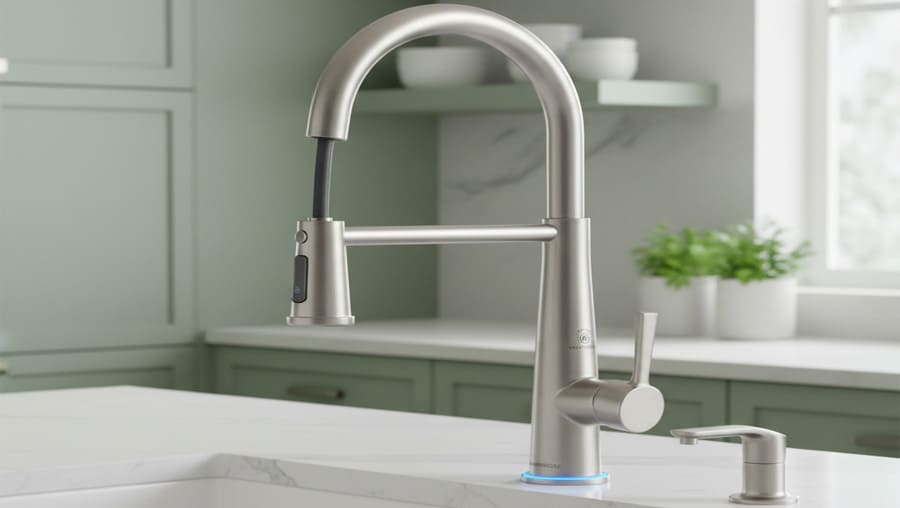
Some designs are so fundamentally practical that they become the unshakable standard. The pull-out/pull-down kitchen faucet is one of them. Its ability to extend the reach of the water stream to every corner of the sink, fill pots on the countertop, and simplify cleanup is a benefit that users are unwilling to give up. In 2026, this isn’t changing.
What is changing is the refinement of this core feature.
Innovation in Utility: Magnetic Docking
The most significant upgrade to this enduring trend is the widespread adoption of powerful magnetic docking systems. In older models, the sprayer head was held in place by a counterweight on the hose. Today, a powerful magnet integrated into the spout and the sprayer head ensures a secure, satisfying snap-back into place, every single time. This prevents the dreaded “drooping faucet head” and adds a touch of premium feel and long-term reliability.
| Faucet Style | Primary Motion | Best For | B2B Sourcing Insight |
|---|---|---|---|
| Pull-Down | Pulling the sprayer head straight down from a high-arc spout. | Deep, single-basin sinks; achieving a professional, chef’s kitchen look. | This style dominates the high-end and “prosumer” market segments. A spring-coil design is a key visual differentiator. |
| Pull-Out | Pulling the entire faucet head forward, towards the user. | Kitchens with lower cabinet clearance; smaller sinks where a high arc might overpower the space. | A versatile choice for multi-family developments and broader market applications due to its adaptable profile. |
Pro Tip: When evaluating a pull-out faucet, always check the quality of the hose. Look for a braided nylon hose over a metal one. It’s quieter, more flexible, and less likely to kink or fray over time.
Trend 2: The Smart Revolution – Your Faucet as a Kitchen Assistant
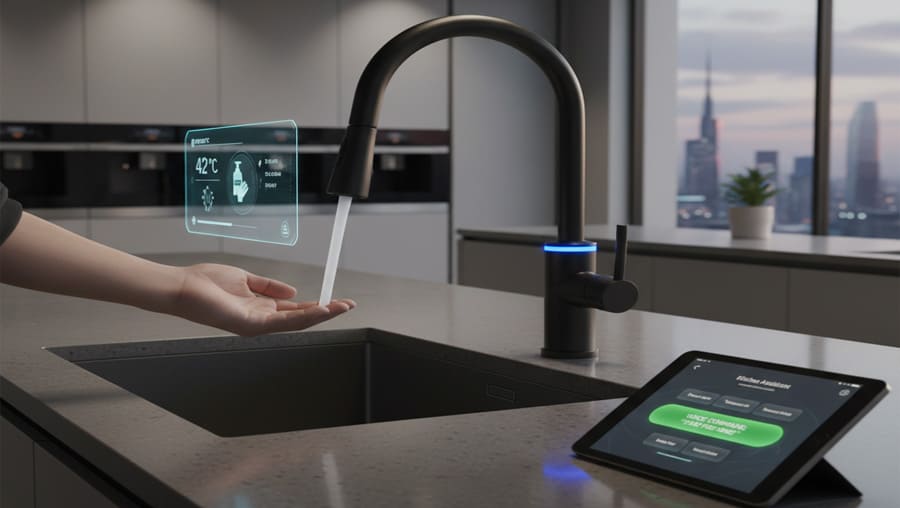
While the pull-out mechanism provides physical flexibility, the 2026 smart technology trend provides a new level of operational convenience and control. The faucet is evolving from a manual tool into an intelligent kitchen assistant.
From Touch to Talk: A Breakdown of Smart Features
- Touch On/Off (Capacitive): This technology allows you to tap anywhere on the faucet’s body or spout with your wrist, forearm, or elbow to start and stop the flow of water. It’s the perfect solution for when your hands are covered in dough, grease, or grime.
- Touchless (Infrared): A motion sensor, typically located on the base or front of the faucet, detects the presence of your hands to activate the water. It’s the ultimate in hygiene, completely eliminating the need to touch the faucet and preventing cross-contamination.
- Voice Control & WiFi: This is the cutting edge. By connecting to your home’s smart network (like Amazon Alexa or Google Home), you can issue verbal commands. This unlocks a new level of precision:
- “Hey Google, ask the faucet to dispense 12 ounces of water.”
- “Alexa, turn on the faucet to 95 degrees.”
- “Hey Google, fill the spaghetti pot.” (with pre-set volumes)
Smart Faucet Feature Matrix
| Feature | Core Technology | Key Benefit | Ideal for… |
|---|---|---|---|
| Touch On/Off | Capacitive Sensing | Convenience. Perfect for messy hands. | Busy home cooks, bakers, families with kids. |
| Touchless | Infrared (IR) Sensor | Hygiene. Prevents cross-contamination. | Health-conscious users, homes with immunocompromised individuals. |
| Voice & WiFi | Microphone & Network Chip | Precision & Hands-Free Control. Dispense exact amounts and temperatures. | Tech enthusiasts, serious home chefs, users with mobility challenges. |
Trend 3: The Material Shift – Stainless Steel’s Inevitable Rise
For decades, chrome-plated brass has been the default material for kitchen faucets. While still a major player, 2026 marks a significant inflection point where Solid Stainless Steel (specifically grade SUS304) is capturing a major portion of the market. Consumers and developers are increasingly choosing it for its clear, tangible benefits.
Why Stainless Steel is Winning
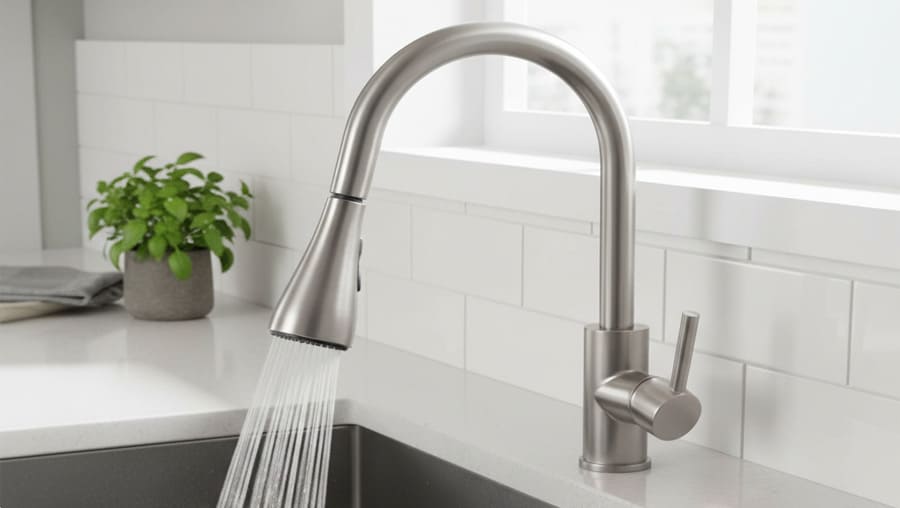
- 100% Lead-Free and Healthy: Unlike brass, which is an alloy that historically contained lead (and now requires a special “lead-free” composition), stainless steel is inherently lead-free. Its composition of steel, chromium, and nickel is pure and stable. Water passing through a solid stainless steel faucet never touches lead.
- Exceptional Durability: Stainless steel is harder than brass and is not a plated finish. The brushed texture you see is the material itself. This means there is no chrome or other finish that can chip, flake, or peel over time. It is incredibly resistant to scratches and corrosion.
- Modern, Professional Aesthetic: The soft, brushed look of stainless steel coordinates perfectly with other high-end kitchen appliances, creating a cohesive, professional-grade aesthetic that consumers desire.
This market shift is why a product like the SpringFaucet Stainless Steel Pull-Out Kitchen Faucet has become so popular. It perfectly embodies the convergence of 2026’s most powerful trends: the timeless functionality of a pull-out design combined with the health benefits, durability, and modern look of solid SUS304 stainless steel. It represents the new benchmark for quality and design.
Trend 4: The Foundational Demands – Hygiene & Water Conservation
Underpinning all the trends in form and function are two core principles that are now non-negotiable for the 2026 consumer: hygiene and sustainability.
- Hygiene in Focus: This goes beyond just touchless technology. The non-porous surface of stainless steel is naturally more hygienic than other materials, as it resists bacteria growth and is easy to clean and disinfect without damaging a finish.
- Intelligent Water Conservation: Saving water is a global responsibility and a key feature.
- High-Efficiency Aerators: Modern faucets use advanced aerators that infuse air into the water stream, making it feel fuller and more powerful while using less water (e.g., 1.8 GPM vs. the old standard of 2.2 GPM).
- Smart Faucet Savings: Touchless and voice-activated faucets inherently save water by running only when needed, eliminating waste from an unattended running tap.
A Manufacturer’s Guide for B2B Buyers

For importers, distributors, and property developers, navigating these trends is key to market success. Here’s how to source products that will win in 2026:
- Embrace the Stainless Steel Shift: Dedicate a significant portion of your catalog to solid SUS304 stainless steel faucets. It’s not a niche product anymore; it’s a mainstream driver of sales. Highlight its lead-free and durability benefits in your marketing.
- Offer Tiered Technology: Not everyone is ready for a fully voice-activated faucet. A successful strategy is to offer a tiered approach:
- Good: A high-quality mechanical pull-out (the volume seller).
- Better: The same design with integrated Touch On/Off technology.
- Best: A flagship model with full touchless, voice, and WiFi capabilities.
- Prioritize Core Mechanical Quality: The smartest faucet in the world is a failure if its hose leaks or its cartridge drips. Partner with a manufacturer who demonstrates mastery of the fundamentals. Ask about the brand of their ceramic cartridge, the material of their hoses, and the precision of their magnetic docking.
- Demand OEM/ODM Flexibility: The ability to customize is a huge advantage. A strong manufacturing partner can work with you to create a unique product—for example, a stainless steel faucet with a matte black PVD-coated accent, or the integration of a specific smart home platform. This is how you build a brand, not just sell a product.
Frequently Asked Questions (FAQ)
Q1: Is stainless steel harder to keep clean than chrome? While polished chrome is very good at hiding water spots, modern brushed stainless steel finishes are treated to resist fingerprints and water spots. They are very easy to maintain with a simple wipe-down with a soft cloth.
Q2: Are smart faucets reliable and will they last? The technology has matured significantly. Reputable manufacturers use high-quality electronic components and solenoid valves tested for over 500,000 cycles. Furthermore, almost all smart faucets include a manual handle, so you always have a mechanical backup.
Q3: Is the professional “spring” style pull-down faucet still a trend? Yes, very much so. This “commercial” or “chef’s faucet” look remains extremely popular for homeowners who want to make a bold statement. The trend in 2026 is seeing these designs become slightly more refined and streamlined for better integration into a wider range of kitchen styles.
Conclusion: The Perfect Blend of Function and Intelligence
The kitchen faucet trends for 2026 are not about fleeting styles; they are about a meaningful evolution in performance. The future is a faucet that anchors your kitchen with the proven, indispensable functionality of a pull-out design. It elevates this experience with smart, intuitive technology that adds convenience and promotes hygiene. And it builds this all on a foundation of healthy, durable, and beautiful materials like solid stainless steel.
For homeowners, this means your next faucet will be a true partner in the kitchen. For businesses, it means the path to success lies in embracing this powerful convergence of function, intelligence, and material quality. The faucet is no longer just a tap; it’s the sophisticated, hard-working command center of the modern kitchen.
Recommended Links
Internal Links:
- Are Smart Faucets Worth It? A Complete Technology Breakdown
- The Ultimate Guide to Faucet Materials: Stainless Steel vs. Brass
- The Ultimate Guide to SUS304 Stainless Steel Faucet
External Links (Authoritative Sources):
- NSF/ANSI 61: The Standard for Drinking Water System Components – The authoritative source on lead-free material safety.
- National Kitchen & Bath Association (NKBA) Annual Trends Report – A leading industry resource for kitchen design and technology trends.
- How Smart Home Technology is Changing the Kitchen (CNET) – For a broader perspective on kitchen technology integration.