
In commercial real estate development, faucets are often categorized as a simple “fitting” and their strategic importance is dangerously underestimated. Yet, the choice you make today will have a tangible impact on your operational budget and brand reputation for years to come. The difference between a standard commercial faucet and a true low-maintenance commercial faucet can translate into tens of thousands of dollars in hidden costs over a project’s first 5-10 years.
As we navigate 2026, you’re facing a triple-threat: soaring skilled labor costs, tightening sustainability regulations (like LEED and BREEAM), and rising tenant expectations for “healthy” and reliable buildings. As a high-frequency touchpoint, the faucet’s performance is a direct reflection of your property’s quality.
This guide is your strategic roadmap. We will move beyond marketing claims and delve into the technical and financial realities of faucet selection. You will learn how to transform a potential maintenance liability into a competitive advantage and a tangible asset for your portfolio.
Last Updated: April 2026 | Estimated Reading Time: 17 minutes
In This Guide, You Will Discover:
- The quantifiable technical standards that define a “low-maintenance” faucet in 2026.
- Why reducing faucet maintenance is now a strategic necessity, not a choice.
- A deep dive into the core components that determine a faucet’s reliability.
- How to calculate the Total Cost of Ownership (TCO) to justify upfront investment.
- A procurement checklist to ensure you source truly durable products.
Redefining “Low-Maintenance”: Beyond the Marketing Slogan
The term “low-maintenance” is overused. In 2026, it must be defined by a matrix of quantifiable, verifiable technical standards. When you are specifying faucets for a commercial project, demand proof that they meet these benchmarks.
| Technical Standard | 2026 Benchmark for High-Traffic Commercial Use | What This Means For Your Project |
|---|---|---|
| Failure Rate (MTBF) | <1% failure rate over 5 years at 300 cycles/day. Mean Time Between Failures (MTBF) should be specified. | Drastically fewer maintenance calls, reduced operational disruption, and higher tenant satisfaction. |
| Material Durability | Faucet body must pass accelerated aging tests simulating 20 years of use. No structural failures. | Ensures the core investment lasts the intended lifecycle of the interior, avoiding costly wholesale replacements. |
| Finish Endurance | Minimum 96-hour Neutral Salt Spray Test (ASTM B117). For premium finishes, demand 24-hour CASS test (ASTM B368). | Guarantees the faucet will resist corrosion and tarnish from cleaning chemicals and heavy use, protecting your aesthetic investment. |
| Component Interchangeability | Core wear parts (valves, aerators) must be standardized and interchangeable across multiple product series and generations. | Massively simplifies your facilities team’s spare parts inventory, reducing capital tied up in stock and speeding up repairs. |
Pro Tip: Don’t just accept a manufacturer’s claims. Ask for the third-party lab reports that validate these numbers. A reputable OEM/ODM partner will have this documentation ready.
Why Low-Maintenance Faucets Are a Strategic Imperative in 2026
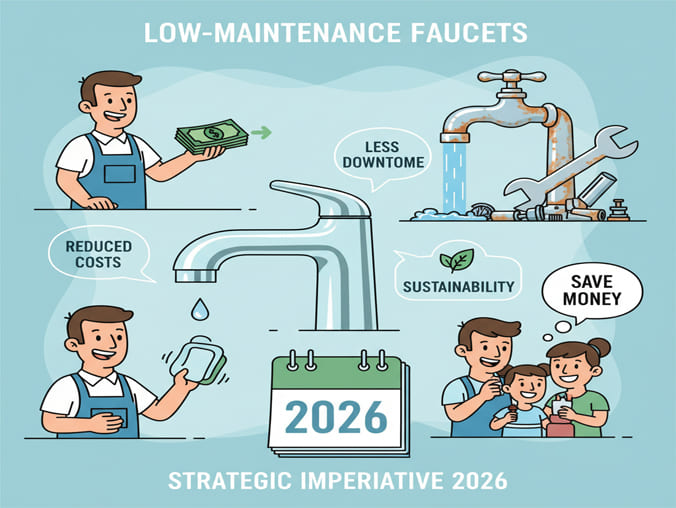
If you’re still choosing faucets based primarily on initial purchase price, you are overlooking four critical market forces that are reshaping property management and asset valuation.
1. The Operational Cost Crisis
The cost of skilled labor is a runaway train. In major global hubs, the cost for a single visit from a qualified plumber has skyrocketed, often exceeding 150−150-200 per hour. A simple faucet repair, which might take an hour or two including travel, now means the labor cost is 5 to 10 times the cost of the replacement part itself. A single failing faucet in a 300-unit building can trigger thousands in unplanned annual operational expenditure (OpEx).
2. The Link Between Green Certification and Asset Value
Leading green building certifications like LEED v4.1, BREEAM, and WELL v2 now place a heavy emphasis on product lifecycle, durability, and embodied carbon.
- Durability: Choosing a low-maintenance faucet that lasts 15-20 years instead of 5 means you replace it once instead of four times. This drastically reduces waste and the resource consumption associated with manufacturing and transporting new products.
- Embodied Carbon: Fewer replacements directly lower the project’s total embodied carbon, a key metric for ESG-focused investors.
- Financial Impact: Higher certification levels can lead to rental premiums and a higher asset valuation upon sale due to a lower capitalization rate.
3. Tenant Experience is Your Core Product
For office buildings, high-end hotels, and build-to-rent communities, frequent maintenance issues are a direct failure of the customer experience. A leaking, stiff, or tarnished faucet isn’t just a maintenance ticket; it’s a constant, visible reminder of poor quality.
- It directly impacts tenant satisfaction and renewal rates.
- It can lead to negative online reviews and damage your property’s reputation.
- A faucet that works flawlessly and looks new for years is a silent ambassador for your brand’s commitment to quality.
4. The Mandate for Supply Chain Resilience
In a volatile global market, relying on a single, proprietary, imported part for maintenance is a significant risk. What happens if that part is discontinued or faces a 6-month shipping delay? You could have units offline for extended periods. The strategic solution is to partner with manufacturers who have:
- Deep, localized spare parts inventory.
- A responsive technical support team in your region.
- Standardized components that aren’t dependent on a single niche supplier.
Technical Teardown: The Anatomy of a Low-Maintenance Faucet
Let’s “dissect” a faucet to understand the internal components that create its reliability DNA.
The Valve: The “Heart” of the Faucet
This is the single most critical component for long-term, drip-free performance.
| Valve Technology | Durability & Performance | 2026 Commercial Recommendation |
|---|---|---|
| Precision Ceramic Disc | Gold Standard. Uses two ultra-hard, polished ceramic discs. Lifespan of 500,000 to 1,000,000+ cycles. | The Only Choice for High-Traffic Projects. Demand Zirconia-toughened alumina ceramic for 1.5x hardness. Ask for the EN817 or ASME A112.18.1 lifecycle test report. |
| Compression / Cartridge | Older technologies using rubber washers or plastic cartridges. Prone to wear, leaks, and stiffening over time. | Not Recommended. The low initial cost is quickly erased by frequent maintenance and replacement costs. |
2026 Trend: Leading manufacturers are embedding NFC chips in valve bodies. This allows your maintenance team to simply tap their phone to the faucet to access its entire history: manufacturing date, installation records, and previous repairs, enabling true predictive maintenance.
The Faucet Body: The “Skeleton”
The material and construction of the body determine its structural longevity.
- Low-Lead Brass Alloys (e.g., DZR Brass): Still a strong contender. For 2026, the focus is on alloys using recycled/low-carbon copper content to meet sustainability goals.
- Solid SUS304 Stainless Steel: The ultimate choice for durability. While initial costs can be 20-30% higher, it offers zero lead leaching and unparalleled corrosion resistance, potentially lasting the entire life of the building without replacement. It is the definition of “fit and forget.”
- Internal Linings: Look for faucets with PEX or food-grade epoxy linings. This creates a barrier between the water and the metal body, preventing limescale buildup and metal ion leaching, preserving both the faucet and water quality.
The Finish: The “Armor”
The finish is what tenants see and touch. It must resist scratches, cleaning chemicals, and fingerprints.
PVD (Physical Vapor Deposition) is the undisputed champion for commercial use. But not all PVD is created equal.
- Standard PVD: Offers excellent hardness and a wide color palette (Brushed Gold, Graphite, Matte Black).
- 2026 Advanced PVD: Look for multi-layer nano-composite PVD. This next-generation finish adds:
- An oleophobic/hydrophobic top layer that repels fingerprints and water spots.
- An antimicrobial intermediate layer (often using silver ions) that can reduce surface bacteria by over 90%—a huge plus for WELL certification and tenant peace of mind.
The Aerator: The Devil in the Details
A clogged aerator is one of the most common maintenance calls.
- Standard Aerators: Require manual removal and cleaning every 3-6 months in hard water areas.
- Self-Cleaning Aerators: Utilize flexible silicone nozzles or unique flow channels that use water pressure to automatically break up and flush out limescale deposits. This can extend the manual cleaning interval to 1-2 years, dramatically reducing routine labor.
- Quick-Release Housings: Allows for tool-free replacement of the aerator, cutting a 10-minute job down to 30 seconds.
The TCO Model: How Low-Maintenance Creates Real Financial Value
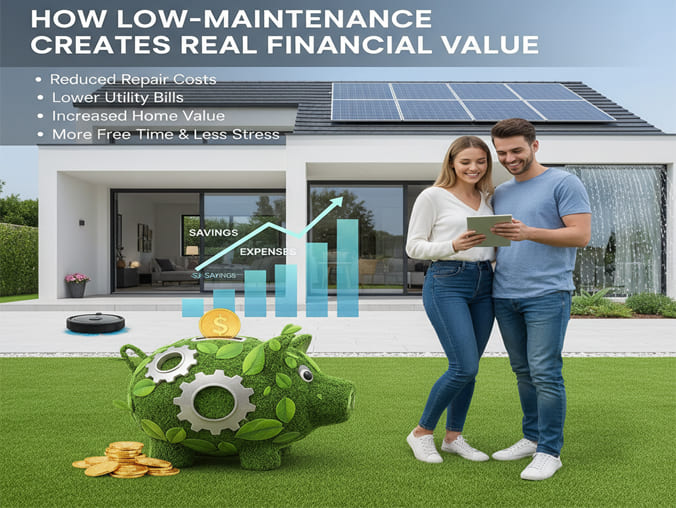
Let’s run the numbers. Consider a 500-unit build-to-rent apartment project over a 20-year lifecycle.
| Cost Item | Standard Commercial Faucet | True Low-Maintenance Faucet | Financial Impact |
|---|---|---|---|
| Initial Purchase Cost | $75 / unit | $125 / unit | +$25,000 initial investment |
| Replacement Frequency | Every 5 years (4 replacements) | Once (if at all) | – |
| Replacement Cost (Parts + Labor) | $150 / instance | $30 (valve only) | Low-maintenance unit needs only a core part swap. |
| 20-Year Maintenance Total | 500 units x 4 x 150=∗∗150 = **300,000** | 500 units x 1 x 30=∗∗30 = **15,000** | $285,000 in direct maintenance savings. |
| Tenant Disruption / Complaint Cost | High (frequent repairs) | Negligible | Boosts satisfaction, renewal rates, and NPS. |
| Total Cost of Ownership (20 Yrs) | 37,500(initial)+37,500 (initial) + 300,000 = $337,500 | 62,500(initial)+62,500 (initial) + 15,000 = $77,500 | $260,000 total savings. |
Conclusion: A 67% higher initial investment yields a 77% reduction in Total Cost of Ownership, delivering a net saving of over a quarter of a million dollars for the project. This is the power of lifecycle thinking.
Partnering for Success: The OEM/ODM Advantage with Springfaucet
For large-scale developers and wholesalers, standardization and supply chain security are paramount. This is where partnering directly with a flexible, expert manufacturer becomes a game-changer.
As an OEM/ODM focused factory, Springfaucet works with commercial clients to engineer solutions tailored to their specific needs. We understand that your project in a hard-water region has different requirements than one in a luxury hotel.
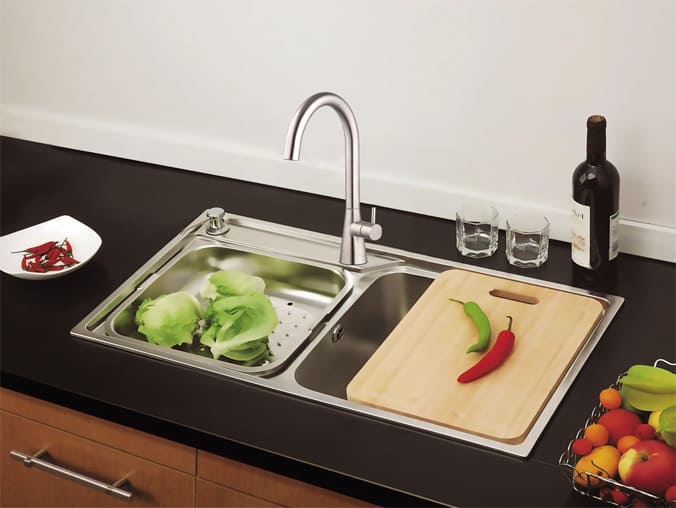
We can customize products to meet your exact performance and aesthetic standards, from specifying Zirconia ceramic discs to developing a custom PVD finish. Our Modern Stainless Steel Kitchen Faucet is a prime example of this philosophy in action—built with solid SUS304 steel and a high-performance valve, it’s designed for a lifetime of flawless use. By working with us, you gain control over your supply chain and access to engineering expertise, ensuring your project is equipped with faucets that truly perform.
The 2026 Commercial Faucet Procurement Checklist
Use this checklist when issuing a tender or evaluating suppliers. Demand documentation.
1. Core Performance Data:
- Valve Lifecycle Test Report: Must show ≥1,000,000 cycles under EN817/ASME A112.18.1.
- Finish Corrosion Test Report: Minimum 96 hours Neutral Salt Spray.
- Materials Certification: Proof of low-lead brass or SUS304 stainless steel composition.
- Water Efficiency & Heavy Metal Leaching Report: Compliance with local standards (e.g., WaterSense, GB 18145-2019).
2. Supply Chain & Service Capability:
- Does the supplier have local/regional spare parts warehousing? What is their guaranteed delivery time?
- Do they offer a digital/QR code-based system for repair requests and parts identification?
- Do they provide standardized maintenance training packages for your facilities management teams?
3. Sustainability Credentials:
- Can they provide an Environmental Product Declaration (EPD) or product carbon footprint report?
- Is the packaging made from recycled materials and free of single-use plastics?
- Do they offer a take-back or recycling program for end-of-life products?
Frequently Asked Questions (FAQ)
Q: Our project budget is tight. Should we save money on faucets? A: This is the most common and costly mistake. As the TCO model shows, faucets are a classic “invest now to save later” category. Cutting corners on faucets simply transfers costs from your initial construction budget to your long-term operational budget, where it will cost you far more. A better strategy is to tier your products: use ultra-durable models in high-traffic public areas and reliable but more basic models in back-of-house spaces.
Q: How can I verify a supplier’s “low-maintenance” claims are real? A: Trust but verify. Ask for a list of reference projects that have had their faucets installed for at least 3-5 years. Speak directly to the property manager of that site and ask about their actual failure rates and maintenance experience. Secondly, write key performance indicators (e.g., “5-year failure rate below 1%”) into your supply contract as a warranty clause.
Q: Are smart/touchless faucets better for maintenance? A: It’s a mixed bag. Basic infrared touchless faucets are excellent for public restrooms as they eliminate mechanical wear on the handle and prevent water waste. However, highly complex “smart” faucets with digital displays and intricate electronics can introduce a new, often more expensive, point of failure. For 2026, the consensus is: use robust touchless faucets in public areas, and mechanically simple but internally superior faucets in private spaces like hotel rooms and apartments.
Conclusion: A Strategic Investment for the Next Decade
Choosing a faucet for your 2026 commercial project is not a procurement task; it is a strategic investment in operational efficiency, tenant satisfaction, and long-term asset value. In a future defined by rising labor costs and stringent sustainability standards, a truly low-maintenance faucet is your project’s immune system against unforeseen costs and reputational damage.
Your next steps should be clear:
- Analyze: Review your past projects and calculate the true annual maintenance cost per faucet.
- Update: Revise your standard tender documents to mandate TCO analysis and third-party performance reports.
- Partner: Engage with expert manufacturers like Springfaucet who can work with you to engineer a solution that maximizes value for your specific portfolio.
By prioritizing durability and lifecycle performance, you are not just buying a piece of hardware; you are securing the financial health and reputation of your asset for a decade to come.
Recommended Links
Internal Links:
- What is the Most Popular Finish for Bathroom Faucets?
- SUS304 vs. Brass: Choosing the Right Faucet Material
- The Ultimate Guide to Water Saving Faucet Technology How Aerators Slash Your Water Bills
External Links (Authoritative Sources):
- U.S. Green Building Council (LEED) – Official resource for the LEED certification system.
- ASTM International (Standards Organization) – Source for testing standards like ASTM B117 (Salt Spray Test).
- ASME (American Society of Mechanical Engineers) – Organization behind plumbing standards like ASME A112.18.1.