
Your home’s plumbing is its circulatory system—a hidden network essential for life, yet often ignored until there’s a problem. Consider this: the average modern home contains 150 to 300 meters of piping, enough to circle a football pitch. When this system fails, the consequences are swift and expensive. Plumbing issues are the second leading cause of home repair expenses, with emergency calls costing anywhere from 500toover500 to over 1,500.
This guide is designed to empower you. We’ll demystify your home’s plumbing, taking you on a complete journey from the city water main to the final drain. By understanding this system, you’ll transform from a worried homeowner into a savvy property manager, capable of preventing costly disasters, making smart upgrade decisions, and protecting your most valuable asset.
Last Updated: April 2026 | Estimated Reading Time: 17 minutes
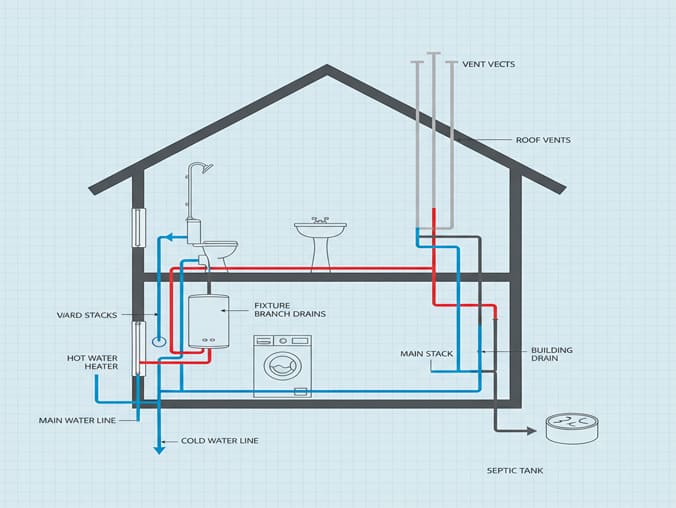
In This Guide, You’ll Master:
- The three core pillars of your home’s plumbing: Supply, Drain, and Vent.
- How to manage water pressure and temperature for safety and efficiency.
- The science behind modern piping materials like PEX vs. Copper.
- A step-by-step emergency response plan for leaks and clogs.
- How strategic upgrades can boost your property value and lower insurance premiums.
The Macro-Architecture of Your Home’s Water System
At its core, your plumbing is composed of three interconnected systems working in harmony. Understanding their distinct roles is the first step to mastering your home’s water management.
The Three Pillars of Home Plumbing
- The Supply System: This is the pressurized network that brings clean water (potable water) into your home from the municipal supply or a private well. It branches out to deliver cold water directly to fixtures and to the water heater for your hot water supply.
- The Drain-Waste-Vent (DWV) System: This is the non-pressurized, gravity-fed network that carries wastewater and solids away from your home. Every fixture—sinks, toilets, showers—is connected to it.
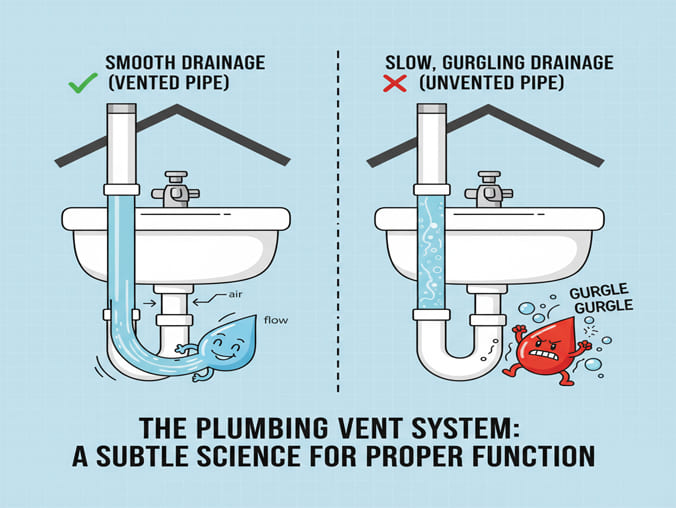
- The Vent System: The unsung hero of your plumbing. This network of pipes channels air from the outdoors (usually through the roof) into the drain system. This prevents a vacuum (siphoning) that would drain p-traps and allows sewer gas to escape safely.
Expert Insight: Think of the vent system as the plumbing’s “lungs.” Without it, the drain system can’t “exhale” displaced air or “inhale” to break vacuums, leading to gurgling drains, slow drainage, and dangerous sewer gas entering your home.
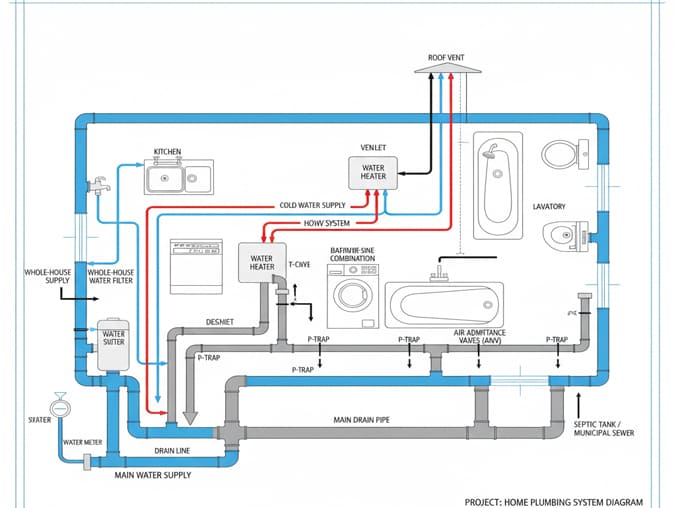
Deep Dive: The Water Supply Sub-System
This is the high-pressure side of your plumbing that delivers clean water on demand. Managing it correctly is key to protecting your appliances and pipes.
1. Water Entry, Metering, and Control
- Water Meter: Located where the municipal line enters your property, this device doesn’t just measure usage for billing. It’s your first line of defense for leak detection. If you’ve turned off all water-using appliances and the meter’s dial is still spinning, you have a leak somewhere in your system.
- Main Shut-Off Valve: This is the most critical valve you own. It shuts off the water supply to the entire house. You should locate it, label it clearly, and test it once a month by turning it off and on to ensure it doesn’t seize up.
- Backflow Prevention Device: Often required by municipal code, this one-way valve prevents contaminated water from your home (e.g., from an irrigation system) from siphoning back into the clean city water supply.
2. Water Pressure Management
Your home’s pipes are designed to operate within a specific pressure range, ideally 40-60 psi (pounds per square inch).
- Pressure Reducing Valve (PRV): If your municipal supply pressure is too high (over 80 psi), this “regulator” is installed near the main shut-off to bring it down to a safe level, protecting your pipe joints, faucets, and appliances from damage.
- Booster Pump: In multi-story homes or areas with low municipal pressure, a booster pump acts as a “heart assist,” ensuring strong, consistent pressure at every fixture, even on the top floor.
Pro-Tip: You can buy a simple screw-on pressure gauge from any hardware store for under $15. Test your pressure at an outdoor hose spigot to get an accurate reading.
3. The Hot Water System
- Storage Tank vs. Tankless: A traditional storage tank heater keeps a large volume of water hot 24/7. A tankless (on-demand) heater heats water instantly as it passes through, offering higher energy efficiency but a higher upfront cost.
- Recirculation Pump: This small pump creates a loop in your hot water lines, constantly circulating hot water so it’s instantly available at the tap. It provides luxury and comfort but must be properly insulated and timed to balance convenience with energy consumption.
- Safe Temperature Setting: The U.S. Department of Energy recommends setting your water heater to 120°F (49°C). This is hot enough for household needs and to prevent microbial growth, while significantly reducing the risk of scalding and saving energy.
Deep Dive: The Drain-Waste-Vent (DWV) System
This system relies on gravity and air pressure to function correctly. Its design is a subtle science.
1. Drain Design Principles
- Gravity is King: Drain pipes are installed with a precise downward slope—typically 1/4 inch of drop per foot of pipe (about 2cm per meter)—to allow waste and water to flow away without being too fast (which leaves solids behind) or too slow (which causes clogs).
- Cleanouts: These capped access points are strategically placed in your drain lines. They are the plumber’s entry points for clearing deep clogs with augers or cameras. Don’t cover them with flooring or drywall!
- P-Traps: The “U” or “P” shaped pipe under every sink and drain. It holds a small amount of water that acts as a vapor lock, blocking sewer gases from entering your home while allowing wastewater to pass.
2. The Critical Role of Venting
- Prevents Siphoning: As a large volume of water flows down a drain, it can create a vacuum powerful enough to suck the water right out of the P-trap. The vent pipe allows air to rush in and break this vacuum, protecting the trap’s water seal.
- Balances Pressure: Venting ensures smooth, fast drainage by allowing air in front of the flowing water to escape. A poorly vented system is a slow-draining system.
The Science of Pipes: A Modern Materials Showdown
The material of your pipes dictates your system’s longevity, water quality, and cost. The industry has seen a massive evolution from metal to modern polymers.
| Material | Typical Lifespan | Key Advantages | Key Disadvantages | Best For |
|---|---|---|---|---|
| PEX (Cross-linked Polyethylene) | 50+ Years | Highly flexible, resists freezing, fast/cheap installation, quiet. | Cannot be exposed to UV light, requires special tools. | Whole-home repiping, remodels, the modern standard. |
| Copper | 70+ Years | Extremely durable, natural antimicrobial properties, proven track record. | High material cost, labor-intensive installation (soldering). | Premium new construction, exposed pipe applications. |
| CPVC (Chlorinated PVC) | 50+ Years | Inexpensive, corrosion-resistant, DIY-friendly (gluing). | Can become brittle with age, limited temperature range. | Budget-conscious projects, cold and hot water lines. |
| Galvanized Steel | 20-50 Years | High strength (obsolete). | Prone to internal rust and corrosion, restricts water flow over time. | IDENTIFY AND REPLACE. Found in homes built before 1970. |
B2B Insight for Developers & Wholesalers: The choice between PEX and Copper is a strategic one. For large-scale multi-family projects, the installation speed and lower material cost of PEX can result in significant project-wide savings. For luxury single-family homes, the longevity and “premium” perception of copper can be a valuable selling point. The key is sourcing high-quality materials of either type that meet international standards like NSF/ANSI 61.
Your Home’s Control Panel: Valves and Emergency Shut-Offs
Knowing where your valves are and what they do is the difference between a small cleanup and a catastrophic flood.
1. The Valve Map
- Main Shut-Off Valve: Controls the entire house.
- Zone Valves: In larger homes, these may control a specific area, like a floor or a wing.
- Fixture Shut-Offs (Angle Stops): Small valves under sinks and toilets. They allow you to shut off water to a single fixture for repair without affecting the rest of the house.
- Appliance Valves: Found behind your washing machine, dishwasher, and refrigerator ice maker.
2. A Quick Guide to Valve Types
- Ball Valve: The modern standard. A lever handle requires a 90-degree turn to go from fully on to fully off. Highly reliable.
- Gate Valve: Common in older homes. A round, wheel-like handle. Prone to failure and should be replaced with a ball valve when possible.
- Angle Stop Valve: The small fixture shut-offs, usually with a small oval handle.
Pro-Tip: Once a year, put on gloves and gently turn every angle stop under your sinks and toilets off and back on again. This prevents them from seizing, ensuring they’ll work when you need them in an emergency.
Seasonal Maintenance Calendar: A Proactive Approach
Treat your plumbing like your car; regular check-ups prevent major breakdowns.
- Spring: Check all outdoor faucets and spigots for freeze damage. Test your sump pump. Inspect your PRV if you have one.
- Summer: Flush your water heater tank to remove sediment, which improves efficiency and lifespan. Clean faucet aerators and showerheads to remove mineral buildup.
- Autumn: Prepare for winter. Disconnect all garden hoses. Shut off the water to outdoor spigots from their indoor valve and drain the line to prevent pipes from bursting.
- Winter: Keep your thermostat set to at least 55°F (13°C), even when away, to prevent pipes in exterior walls from freezing. Let faucets drip slowly during extreme cold snaps.
Emergency Room: Troubleshooting Common Plumbing Failures
When things go wrong, a calm, methodical approach can save you thousands.
1. The Low Water Pressure Decision Tree
- Is it the whole house? → Check the main shut-off valve is fully open. Check your water meter for leaks. Call your utility to see if there’s a municipal issue.
- Is it just one fixture? → Check that its angle stop is fully open. Unscrew and clean the faucet’s aerator—this is the most common culprit.
- Is it only the hot water? → The problem is likely sediment buildup in your water heater or a failing valve on the heater itself.
2. The Leak Emergency Response Protocol
- STOP THE WATER. Immediately turn off the fixture’s angle stop. If you can’t, or if the leak is in a wall, turn off the main shut-off valve for the whole house.
- ASSESS THE DAMAGE. Place buckets and towels. Safely clean up water, especially near electronics.
- CALL A PROFESSIONAL. For any leak inside a wall, ceiling, or coming from a major pipe joint, do not attempt a DIY fix. The risk of further damage is too high.
Modernization Upgrades & Return on Investment (ROI)

Updating your plumbing isn’t just an expense; it’s an investment in your property’s efficiency, safety, and value.
| Upgrade Tier | Components | Typical ROI Payback |
|---|---|---|
| Efficiency Starter | Low-flow faucets, showerheads, modern toilets. | 6-12 Months (via water bill savings) |
| Performance Standard | Repipe with PEX, add smart water monitor. | 2-3 Years (via leak prevention & insurance discounts) |
| Luxury & Health | Full repipe, tankless water heater, whole-home filtration. | 4-5 Years (via energy savings & increased property value) |
The Power of OEM/ODM in Faucet Selection
When undertaking an efficiency upgrade, the fixtures you choose matter. This is where partnering with a flexible manufacturer provides a distinct advantage. As a dedicated OEM (Original Equipment Manufacturer) and ODM (Original Design Manufacturer), we at SpringFaucet specialize in creating faucets that meet specific market demands.
For importers and wholesalers, this means we can engineer products to precise flow-rate requirements (like California’s CALGreen standards) or create designs using specific materials that appeal to your target consumers. This adaptability ensures our partners are always equipped with products that are not just beautiful, but perfectly optimized for their market. Our wide range of products, such as our elegant Freestanding Bathtub Faucets, showcases the design and quality that can be customized to fit any project’s needs.
Financial Impact:
- Updating plumbing can lower homeowners’ insurance premiums by 10-15%.
- A fully modernized plumbing system can increase a property’s appraised value by 3-5%.
Future-Proofing Your Home: The Future of Plumbing is Smart & Sustainable
The next decade will bring radical changes to how we manage water.
- IoT Integration: Smart water monitors will not only detect leaks in real-time and automatically shut off the water but will also use AI to analyze your usage patterns and suggest personalized conservation strategies.
- Sustainability: Greywater recycling systems, which reuse water from showers and laundry for irrigation, will become more common. Rainwater harvesting will be integrated directly into the home’s non-potable water supply.
- Health & Wellness: Point-of-entry filtration systems that remove heavy metals, chlorine, and emerging contaminants will become standard. Real-time water quality sensors will provide constant peace of mind.
Take Control of Your Home’s Health
Your plumbing system is a foundational element of your property’s health and value. Understanding it is the first step toward protecting it. Don’t wait for a costly emergency to pay attention to your pipes. Take proactive steps today.
Recommended Links
Internal Links:
- The Ultimate Guide to Faucet Finishes: PVD vs. Electroplating
- The Ultimate Guide to Water Saving Faucet Technology How Aerator Slash Your Water Bills
- How to Choose the Right Kitchen Faucet: A Complete Buyer’s Guide
External Links (Authoritative Sources):
- International Association of Plumbing and Mechanical Officials (IAPMO) – The organization that develops and maintains the Uniform Plumbing Code (UPC).
- U.S. EPA: WaterSense Program – An authoritative source for information on water-efficient products and practices.
- NSF International: Drinking Water System Components Standards – The official standard for lead-free compliance and drinking water safety.