

Your faucet is the final gatekeeper between the municipal water supply and the water you drink, cook with, and use every day. Its material integrity directly impacts the health of your family. But an invisible threat, lead, could be slowly leaching from older or non-compliant brass faucets, accumulating in your body over time. This neurotoxin is especially dangerous for the developing brains of children and fetuses.
This guide is your definitive resource for understanding the crucial importance of lead-free faucets. We will cut through the marketing jargon, explain the science and global standards, and provide a clear, actionable plan to ensure the water in your home is as safe as possible. This is more than a buying guide; it’s a critical investment in your family’s long-term health.
Last Updated: March 2026 | Estimated Reading Time: 14 minutes
In This Comprehensive Guide, You Will Discover:
- The real definition of “lead-free” and why it doesn’t mean zero lead.
- The critical health risks of lead exposure, even at low levels.
- A clear breakdown of global safety standards (USA, EU, China) so you know what to look for.
- A step-by-step guide to choosing the right lead-free faucet and avoiding common pitfalls.
- How we, as a manufacturer, help businesses navigate these complex regulations.
What is a Lead-Free Faucet? The Truth Beyond “Zero Lead”
The term “lead-free” can be misleading. It’s not a statement of absolute purity but a safety standard that strictly limits the amount of lead that can be present in a faucet’s water-contact components. Understanding this distinction is the first step to making an informed choice.
Essentially, a “lead-free” faucet is one that complies with stringent government regulations on lead content and leaching. These standards are based on two different measurement approaches: the amount of lead in the metal alloy itself, or the amount of lead that leaches out into the water.
- Lead Content Standard (USA): Focuses on the material composition. The weighted average lead content of wetted surfaces cannot exceed 0.25%.
- Lead Leaching Standard (EU/China): Focuses on performance. The amount of lead that leaches into the water must not exceed 5 micrograms per liter (μg/L).
| Standard Type | Measurement Focus | Key Regulation Example | What It Means for You |
|---|---|---|---|
| Material Content | The percentage of lead in the metal alloy. | US Safe Drinking Water Act (SDWA) | Guarantees the faucet is made from ultra-low-lead materials from the start. |
| Performance (Leaching) | The amount of lead that ends up in your water. | China’s GB 18145-2014 | Tests the final product’s real-world safety, ensuring minimal lead exposure. |
How Are They Made? The Technology Behind Safety
Achieving these low-lead standards requires advanced manufacturing techniques and superior materials.
- Material Innovation: The most common approach is replacing high-lead brass with safer alternatives. This includes ultra-low-lead brass alloys (like DZR brass or CW511L), solid SUS304 or 316 stainless steel (which is naturally 100% lead-free), and other modern composites.
- Protective Barrier Technology: A clever solution for brass faucets is to create a physical barrier. This involves lining the interior waterway of the faucet with a non-leaching material like a food-grade PEX tube or an epoxy resin coating, preventing the water from ever touching the metal alloy.
Manufacturer’s Insight: As an OEM/ODM faucet factory, we at SpringFaucet specialize in all these technologies. For our B2B partners in North America, we focus on manufacturing with 0.25% low-lead brass and solid stainless steel to meet NSF standards. For our European and Chinese partners, our focus is on ensuring our products pass the rigorous 5 μg/L leaching tests. We customize the product to meet your market’s specific legal requirements.
Why Choose a Lead-Free Faucet? The Irreplaceable Health Benefits
Choosing a certified lead-free faucet is one of the most impactful decisions you can make for your family’s health. The risks of lead exposure are well-documented by global health organizations like the WHO and CDC, and the danger is cumulative.
1. Protecting Brain Development in Children
Lead is a potent neurotoxin with no safe level of exposure for children. Even low levels can have irreversible effects on a child’s developing brain and nervous system, potentially leading to:
- Reduced IQ and learning disabilities
- Attention Deficit Hyperactivity Disorder (ADHD)
- Behavioral problems and slowed growth
A lead-free faucet is your first line of defense, eliminating a primary source of potential lead contamination in your home.
2. Safeguarding Adult Health
The danger isn’t limited to children. Long-term, low-dose lead exposure in adults is linked to serious health issues, including:
- High blood pressure (hypertension)
- Decreased kidney function and damage
- Reproductive problems in both men and women
- Increased risk of cardiovascular events
Switching to a lead-free faucet is a proactive, preventative measure that contributes to your long-term wellness.
3. Preserving Water Purity and Taste
Lead and other metal contaminants can impart a metallic taste and odor to your water, ruining its purity. Faucets made from high-quality, lead-free materials like stainless steel or those with inert linings ensure that your water tastes crisp, clean, and exactly as it should.
A Global Tour of Lead-Free Regulations: Know Your Standard
Safety standards for faucets vary by region. Knowing the key certifications for your location is the most reliable way to ensure you’re buying a genuinely safe product.
| Region | Key Standard / Certification | The “Lead-Free” Definition | What to Look For on Packaging |
|---|---|---|---|
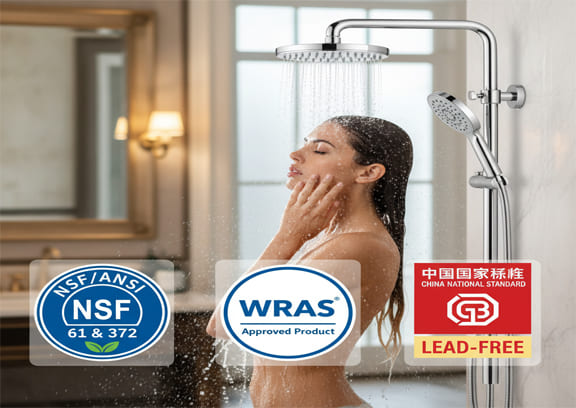
| USA | NSF/ANSI/CAN 61 & 372 | Weighted average lead content ≤ 0.25%. | The “NSF” or “cUPC” mark. Must state compliance with NSF/ANSI 372. |
| European Union | WRAS (UK), DVGW (Germany), 4MS | Lead leaching < 5 μg/L (harmonized under the 4MS Initiative). | The “WRAS Approved” or “DVGW” logo, and compliance with EN 817. |
| China | GB 18145-2014 | Lead leaching ≤ 5 μg/L. | The GB 18145-2014 standard number clearly printed on the box or product. |
| Australia/NZ | AS/NZS 4020, WaterMark | Tests for a range of contaminants including lead leaching. | The “WaterMark” logo and license number. |
Pro Tip: Regulations are constantly evolving. The Chinese GB 18145 standard was significantly tightened in 2014. Always ensure the product you buy complies with the latest version of your country’s standard, not an outdated one.
How to Choose the Right Lead-Free Faucet: A Practical 4-Step Guide
Navigating the market can be confusing. Follow this simple, step-by-step process to select a faucet that is verifiably safe.
Step 1: Look for the Certification Mark (Non-Negotiable)
This is the most crucial step. Ignore vague marketing terms like “eco-friendly” or “low-lead.” Look for the specific, official certification mark for your region on the product, its packaging, or the online listing.
- For North America: Prioritize faucets with the NSF/ANSI 61 and NSF/ANSI 372 logos.
- For the UK/EU: Look for WRAS approval or equivalent national certifications.
- For China: Ensure it explicitly states compliance with GB 18145-2014.
Step 2: Choose the Right Core Material
The material directly impacts safety, durability, and cost.
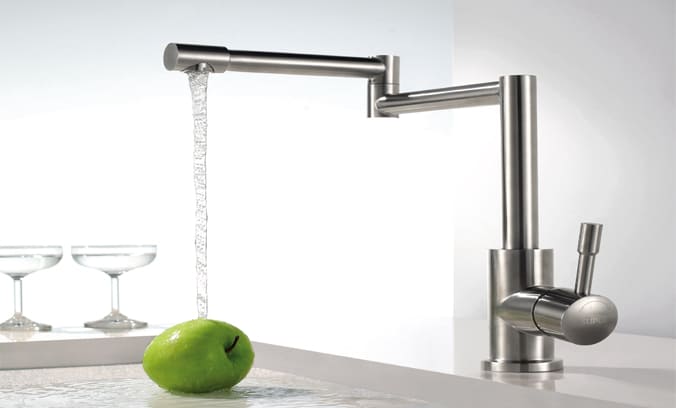
- SUS304 / 316 Stainless Steel: This is the gold standard for health. Stainless steel is naturally 100% lead-free, extremely durable, and corrosion-resistant. While the initial cost may be higher, its longevity and inherent safety make it an excellent investment. The SpringFaucet Modern Stainless Steel Kitchen Faucet is a prime example of this superior material in action.
- Certified Low-Lead Brass: The most common and cost-effective choice. Ensure it’s certified to meet the 0.25% content standard. It offers excellent performance and a wide variety of finishes.
- Faucets with PEX Linings: A great budget-friendly option. These faucets use a brass exterior for structure and aesthetics, but the water only travels through an inert PEX plastic tube inside, ensuring zero contact with the metal.
Step 3: Inspect the Key Components
A faucet is only as safe as its weakest part.
- Valve Cartridge: Insist on a ceramic disc cartridge. The ceramic material (alumina) is inert, lead-free, and provides a durable, leak-proof seal.
- Aerator: This small piece at the tip of the spout also comes into contact with water. Ensure it is made from lead-free materials. Good brands will specify this.
Step 4: Practice Safe Installation and Use
- Installation: Ensure your plumber uses lead-free solder and pipe fittings during installation.
- Initial Flush: After installing a new faucet, run the cold water for at least 2-3 minutes to flush out any debris or contaminants from the installation process.
- Daily Flush: Each morning, run the cold water for 30 seconds before using it for drinking or cooking. This clears out water that has been sitting stagnant in your pipes and faucet overnight.
Beyond Lead: Other Health Factors to Consider

While lead is the primary concern, a truly healthy faucet addresses other potential issues.
- Microbial Growth: The aerator can become a breeding ground for bacteria like Legionella if not cleaned. Choose a faucet with an easily removable aerator and clean it every few months by soaking it in vinegar. Some high-end faucets even feature antimicrobial coatings.
- Other Heavy Metals: A comprehensive NSF/ANSI 61 certification also tests for the leaching of other metals like nickel, chromium, cadmium, and arsenic, providing an extra layer of safety.
- Hot Water Usage: Never use water from the hot tap for drinking or cooking. Hot water dissolves metals, including lead, from pipes and faucets much more readily than cold water.
Frequently Asked Questions (FAQ)
Q1: My house is old. Do I need a lead-free faucet more than someone in a new house? Yes. While lead-free faucets are essential for everyone, older homes (pre-1986 in the US) may have lead pipes, copper pipes with lead solder, or older brass fixtures. Installing a certified lead-free faucet is a critical step to reduce lead exposure at the point of use.
Q2: Will a water filter remove lead? Some, but not all. A filter certified under NSF/ANSI 53 is specifically designed to reduce lead. However, relying solely on a filter is a secondary solution. The best approach is to control the source by installing a lead-free faucet first.
Q3: Are expensive, designer faucets automatically lead-free? Not necessarily. Price and brand name are not guarantees of safety. The only true guarantee is the presence of a legitimate, third-party certification mark like NSF/ANSI 61 or WRAS. Always verify the certification.
Conclusion: The Smartest Investment in Your Family’s Health
Choosing a certified lead-free faucet is far more than a simple home upgrade. It is a fundamental act of health protection for your family. It’s a proactive measure that shields your children from irreversible neurological harm and reduces long-term health risks for adults.
When you make your decision, remember the three pillars of water safety:
- Verify the Certification: This is your proof of safety. Prioritize NSF, WRAS, or the latest GB standard.
- Select a Safe Material: Opt for the inherent safety of stainless steel or certified low-lead brass.
- Adopt Healthy Habits: Always flush your tap in the morning and use only cold water for consumption.
Your Action Checklist:
- Inspect: Go check the faucets in your kitchen and main bathrooms. Can you find any certification marks?
- Upgrade: If it’s time to replace, prioritize the kitchen faucet. Choose a model like the SpringFaucet Modern Stainless Steel Faucet that is built with inherently lead-free materials.
- Share: Spread this knowledge. Help your friends and family understand the importance of a lead-free faucet to protect their own homes.
Recommended Links
Internal Links:
- The Ultimate Guide to SUS304 Stainless Steel Faucets
- Why OEM Faucet manufacturering in China is Your Strategic Advantage
- Choosing the Right Faucet Finish: A Complete Breakdown
External Links (Authoritative Sources):
- U.S. EPA: Basic Information about Lead in Drinking Water – Official information from the Environmental Protection Agency.
- NSF International: Lead in Drinking Water – The certifying body explains the standards.
- World Health Organization (WHO): Lead Poisoning – Global health information on the dangers of lead exposure.