
If you’re in the market for faucets in 2025, you are witnessing a fundamental shift in the industry, driven by economics, health standards, and manufacturing innovation. For years, brass has been the traditional choice. But now, a superior material has not only emerged as a viable alternative but is poised to become the new standard: SUS304 Stainless Steel.
This is not just a trend; it’s a strategic response to a changing world. With the price of copper, the primary component of brass, reaching historic highs (LME copper at USD$10,996.50/T and climbing), manufacturers and buyers are seeking a solution that offers price stability without compromising on quality. The answer, which we have been perfecting for over a decade, is solid stainless steel. It is the definitive material for the future of faucets—healthier, more durable, and now, more versatile than ever before.
This comprehensive guide will take you inside our manufacturing world to explore why SUS304 is the smartest choice for your home and your business.
Last Updated: Nov 2025 | Estimated Reading Time: 24 minutes
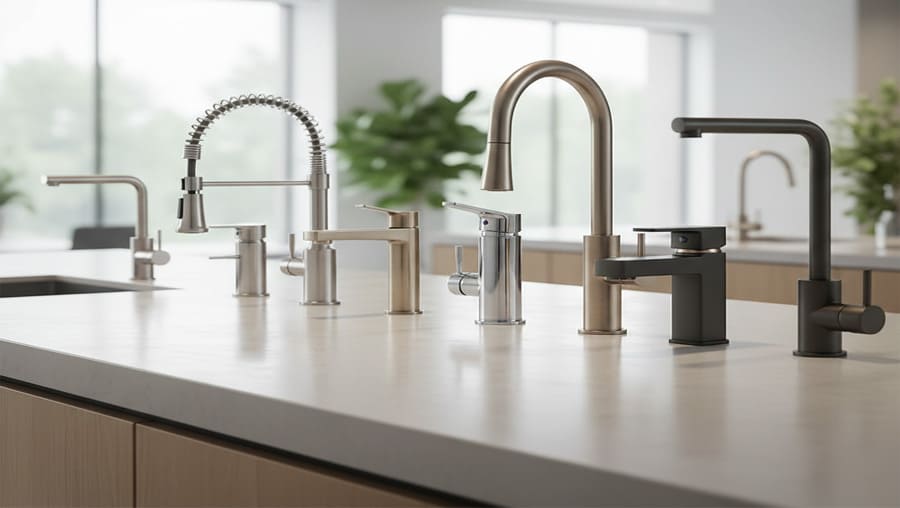
The Driving Force: Why the Shift from Brass is Happening Now
For decades, the faucet industry ran on brass. But the landscape has dramatically changed. The primary reason is a stark economic reality that affects everyone from the raw material supplier to the end consumer.
The Soaring Cost of Copper: Copper is a strategic global commodity. As of today, its price on the London Metal Exchange (LME) has shattered records. This isn’t a temporary spike; it’s a long-term trend driven by global demand in electronics, electric vehicles, and infrastructure. For faucet manufacturing, this means the cost of our primary raw material, brass (an alloy of copper and zinc), has become volatile and prohibitively expensive.
Continuing to rely solely on brass means accepting unpredictable price increases and supply chain instability. As forward-thinking manufacturers, we recognized this over a decade ago and began perfecting the processes for the most logical successor: SUS304 stainless steel.
| Economic Factor | Impact on Traditional Brass Faucets | The SUS304 Stainless Steel Advantage |
|---|---|---|
| Raw Material Cost | Directly tied to volatile LME copper prices, leading to unpredictable and rising costs. | Based on more stable iron, chromium, and nickel prices, offering greater cost predictability. |
| Supply Chain | Vulnerable to shortages and price shocks as copper is deemed a strategic national resource. | A more resilient and globally available supply chain. |
| Long-Term Value | Higher upfront cost is increasingly difficult to justify based on material alone. | Delivers superior performance and health benefits at a more stable and competitive price point. |
The Unbeatable Health Advantage: Naturally 100% Lead-Free
Beyond economics, the most compelling reason to choose SUS304 is a matter of health.
Brass is an alloy that, by its nature, can contain lead to improve its malleability. While modern regulations mandate “lead-free” brass (containing <0.25% lead), the material itself is not inherently free of lead.
SUS304 stainless steel, by its very definition, contains no lead. It is an alloy of iron, chromium, and nickel. There is no lead in its composition, period. This means the waterway of a solid stainless steel faucet is guaranteed to be 100% lead-free, providing the ultimate peace of mind for you and your family.
Manufacturer’s Insight: For our B2B partners, this is a powerful marketing and compliance tool. Offering a product that is “naturally lead-free” is a stronger, clearer message than “compliant with lead-free standards.” It removes all doubt for the end consumer.
The Manufacturing Revolution: From Simple Pipes to Complex Art
Early skepticism towards stainless steel faucets was understandable. A decade ago, the material’s incredible hardness—far greater than soft brass—made it difficult to machine. Early models were often simple, welded tubes with limited aesthetic appeal.
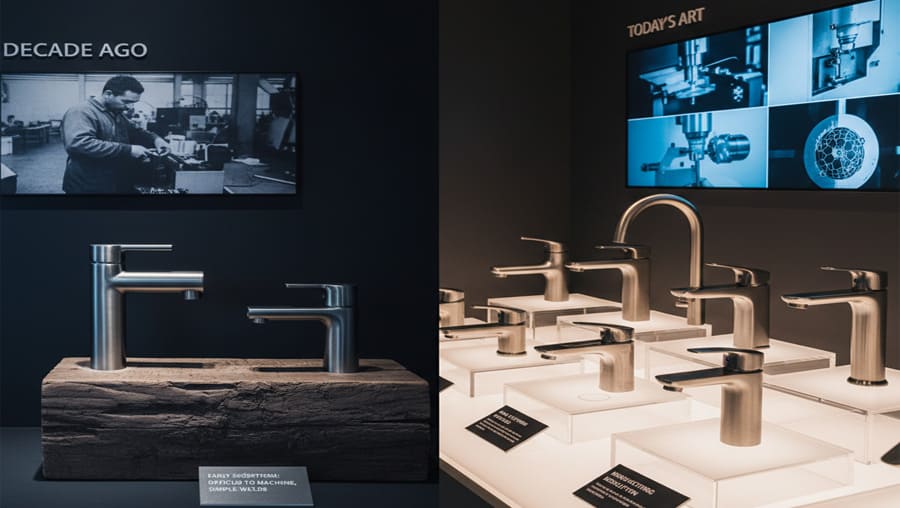
But technology has evolved. We have pioneered and perfected advanced manufacturing techniques that allow us to shape stainless steel into any form imaginable, rivaling the design complexity once only possible with brass.
Modern Stainless Steel Faucet Manufacturing Processes
| Manufacturing Process | Description in Simple Terms | Resulting Advantage |
|---|---|---|
| Investment Casting (Lost-Wax) | A wax model of the faucet is created, encased in a ceramic shell, and then melted out. Molten stainless steel is poured into the resulting mold. | Intricate, complex designs. This allows for elegant curves, sharp lines, and integrated features previously impossible with stainless steel. |
| Powder Metallurgy | A fine stainless steel powder is compressed into a mold under extreme pressure and then heated (sintered) to form a solid, precise component. | Exceptional precision and consistency. Perfect for creating complex internal parts with tight tolerances, ensuring flawless performance. |
| Hydroforming / Tube Forming | A stainless steel tube is placed in a die and shaped from the inside out using extremely high-pressure fluid. | Seamless, one-piece spouts. This creates a beautifully clean aesthetic with no joints or welds, enhancing both look and durability. |
This technological leap means the old compromises are gone. We can now produce stainless steel faucets with the same elegance, detail, and architectural beauty as any brass faucet on the market.
The Aesthetic Revolution: A World of Color and Texture
The second major objection to early stainless steel was its limited finish—the classic brushed silver. Today, this limitation is a thing of the past. Advanced surface treatment technologies allow us to apply durable, beautiful finishes to stainless steel, offering a complete design palette.
Modern Finishes for SUS304 Faucets
| Finish Technology | How It Works | Available Colors & Textures |
|---|---|---|
| PVD (Physical Vapor Deposition) | A super-hard coating is bonded to the stainless steel at a molecular level in a vacuum chamber. | Brushed Gold, Graphite Black, Champagne Bronze, Rose Gold. Incredibly resistant to scratches and fading. |
| Electrophoresis / Electro-coating | The faucet is dipped in a paint-like emulsion and an electric current is used to deposit a smooth, uniform, and durable coating. | Matte Black, Matte White, Gunmetal Grey. Offers a flawless, modern matte appearance. |
| Nano Painting | Multiple layers of high-performance paint and protective clear coats are applied, similar to automotive finishing. | Virtually any custom color is possible. Allows for unique two-tone designs and vibrant finishes. |
The classic brushed stainless look remains a timeless and popular choice, but you are no longer limited to it. You can now have the superior health and durability of stainless steel in the exact finish your design vision requires.
A Strategic Guide for B2B Partners: Why Sourcing SUS304 is a Winning Strategy

For our partners—importers, distributors, and project developers—embracing the shift to SUS304 stainless steel is not just about adapting; it’s about gaining a significant competitive advantage.
- Gain Price Stability: Decouple your pricing from the volatile copper market. This allows for more accurate forecasting, stable margins, and more competitive quotes on large projects.
- Future-Proof Your Inventory: As global regulations on lead become even stricter and copper becomes more strategic, stainless steel will become the dominant material. Investing now puts you ahead of the curve.
- Lead with a Powerful Health Message: Marketing a 100% naturally lead-free product is a clear and compelling differentiator that builds consumer trust and sets your brand apart.
- Reduce Long-Term Costs: The superior hardness and corrosion resistance of SUS304 mean fewer callbacks, fewer warranty claims, and a more robust product reputation.
When you source from a manufacturer with deep expertise in stainless steel, like SpringFaucet, you are not just buying a product. You are investing in a more stable, more profitable, and more sustainable future for your business. The SpringFaucet Stainless Steel Pull-Out Kitchen Faucet is a perfect example—it combines the health benefits of SUS304, the precision of modern manufacturing, and a timeless design that meets the market’s core demands.
Frequently Asked Questions (FAQ)
Q1: What is the difference between SUS304 and 316 stainless steel? SUS304 is the industry standard for kitchen and bathroom faucets and offers excellent corrosion resistance for typical indoor applications. 316 grade includes molybdenum, which gives it superior resistance to chlorides (like salt). It’s typically overkill for a faucet unless it’s for an outdoor or marine environment.
Q2: Is a stainless steel faucet harder to install than a brass one? No. The installation process is identical. A faucet made from either material uses the same standard plumbing connections, hoses, and mounting hardware. The weight is also comparable.
Q3: How do I clean and maintain a stainless steel faucet? Maintenance is simple. For regular cleaning, a soft, damp cloth is all that’s needed. For tougher spots, a mild solution of soap and water works best. Avoid abrasive cleaners, steel wool, or harsh chemicals, which can damage any faucet finish.
Conclusion: The Smart, Sustainable, and Superior Choice
The case for SUS304 stainless steel faucets is overwhelming. It is the definitive answer to the economic pressures of a volatile copper market. It is the superior choice for health, offering a naturally 100% lead-free waterway. And thanks to revolutionary advances in manufacturing and finishing, it now stands as an equal to brass in design, beauty, and versatility.
The era of compromise is over. You no longer have to choose between cost, health, and design. With a high-quality SUS304 stainless steel faucet, you get all three. As a manufacturer committed to innovation and quality, we are proud to lead this charge, offering a full collection of products that embody the very best of this remarkable material. This is the future of faucets.
Recommended Links
Internal Links:
- Kitchen Faucet Trends 2025: A Manufacturer’s Forecast
- Are Smart Faucets Worth It? A Complete Technology Breakdown
- The Ultimate Guide to Faucet Finishes: PVD vs. Electroplating
External Links (Authoritative Sources):
- London Metal Exchange (LME) Copper Prices – Live and historical data on the key commodity price driving this industry shift.
- The American Iron and Steel Institute: About 304 Stainless Steel – An authoritative resource on the properties of SUS304.
- NSF/ANSI 61: Drinking Water System Components – The official standard for lead-free compliance and drinking water safety.